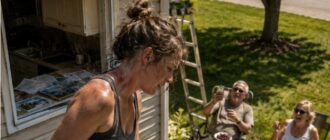
The sun had barely risen over the dry hills of Zacatecas when Daniela Robles stepped into the yard with a bucket of water for the chickens. Life on her small farm was never easy. Since her husband died in a mining accident three years earlier, she had been raising her eight-year-old daughter, Ana, alone. They survived on eggs, handmade tortillas, and whatever little the land could give them. It was a hard life, but it was theirs.
That morning, Ana was playing near the old stone well at the far edge of the property — the one nobody used anymore since the water had dried up. She had always been afraid of it. Daniela used to laugh and tell her it was just an old hole in the ground. But this time, when Ana dropped a pebble into the darkness, she did not hear the hollow echo she expected.
She heard a moan.
“Mom,” Ana called, her voice shaking, “I think there’s someone in the well.”
Daniela froze. She hurried across the yard, leaned over the edge, and listened. At first, there was only silence. Then came a weak, cracked whisper from below.
“Help… please…”
Daniela felt the blood drain from her face. It wasn’t an animal. It was a person.
She sent Ana running for a flashlight and the longest rope they had. When the beam finally reached the bottom, Daniela saw an elderly woman curled up in the mud, her white hair tangled, her clothes torn, one arm bent at a terrible angle. She looked half-dead.
There was no time to fetch help from the village three kilometers away. So Daniela tied the rope to a mesquite tree, slipped off her sandals, and climbed down herself while Ana held the line above. The descent was dangerous. The stones were slick, the walls narrow, and at one point Daniela nearly lost her footing. But she kept going.
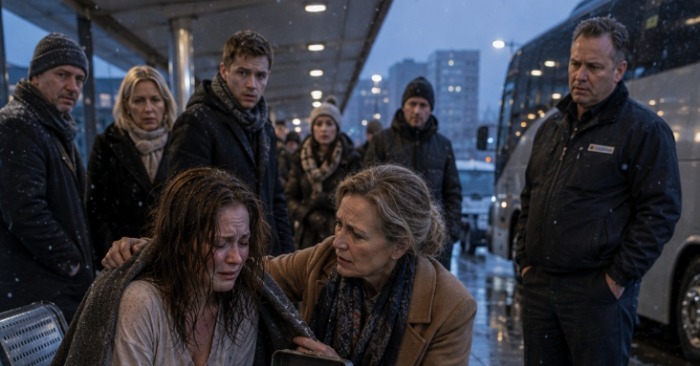
At the bottom, the old woman could barely speak. Everything hurt. She was cold, dehydrated, and trembling. Daniela tied the rope around her as gently as she could, then shouted for Ana to pull while she pushed from below. It took every ounce of strength they had, but together the mother and daughter dragged the woman up out of the well and laid her on the dry grass in the sun.
Her name was Socorro Jiménez.
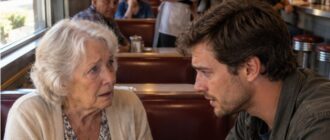
Once they got her inside, wrapped her in blankets, and gave her water by the spoonful, the truth came out in broken pieces. Socorro had not fallen into that well. Her son, Fernando, his wife, and their grown children had taken her there on purpose. For years she had lived with them after being widowed, and little by little they had begun to treat her like a burden — too old, too sick, too expensive. The medications for her blood pressure and diabetes, they said, cost too much. She had become, in their eyes, a problem to be solved.
The day before, they told her they were taking her to visit a relative. Instead, they drove her out to the abandoned property. When she leaned over the well, her grandson pushed her.
And they left her there to die.
Daniela listened in horror. Ana, sitting on the floor beside the sofa, clutched the old woman’s good hand and cried silently. Daniela had very little in life — barely enough for herself and her daughter — but in that moment she knew one thing with absolute certainty: she was not sending this woman away.
“You’re safe here,” she told her. “No one is going to hurt you again.”
The village doctor came that same day after Daniela walked to town and begged for help. He confirmed the arm was fractured, the ribs badly bruised, and that if Socorro had spent one more night in that well, she likely would have died. He treated her without charging a cent. “This isn’t charity,” he told Daniela when she tried to offer eggs as payment. “This is humanity.”
So Socorro stayed.
At first, it was meant to be temporary. But the days began to settle into a strange, gentle rhythm. Daniela worked the farm. Ana did her schoolwork at the kitchen table. Socorro, even with her arm in a cast, tried to help with small things — peeling vegetables, telling stories, teaching Ana old songs. The tiny blue-walled house, which had felt too quiet since Javier’s death, slowly changed. There was more laughter. More warmth. More life.
Ana began calling her “Grandma” without anyone telling her to.
And Socorro, who had once believed her life was over, began to feel human again.
But peace did not last.
One morning, while Daniela was away at the market, a red truck pulled up outside the farm. Ana looked through the window and recognized the terror on Socorro’s face before she even heard the name.
It was Fernando.
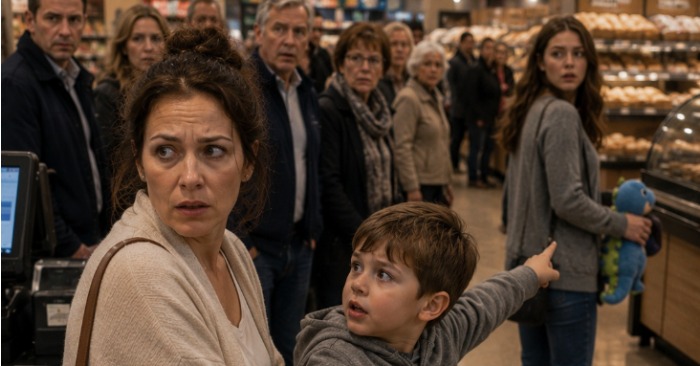
He knocked on the door and shouted that he was looking for his mother, pretending she had gone missing. Ana and Socorro hid under the kitchen table while he walked around the house, peering through the windows, waiting to see if anyone would come out. When he finally left, both of them were shaking.
By the time Daniela returned, everything had changed.
This was no longer just about sheltering an abandoned woman. Now they were in danger too.
That very day, Daniela took Socorro and Ana to the police station. It was the hardest decision Socorro had ever made. Reporting her own son felt like ripping open the last wound in her heart. But Daniela told her the truth: silence would not protect anyone. Not her. Not Ana. Not the next person he decided was inconvenient.
So Socorro gave her statement.
She told them everything.
The arrests were made within days. Fernando, his son Rodrigo, and his daughter Patricia were all charged. And when the trial finally came in Zacatecas, Socorro had to sit in a courtroom and look at the people she had once fed, clothed, and loved more than herself.
It nearly broke her.
But she did not look away.
She told the judge about the years of humiliation. About how she stopped being a mother and became an expense. About the truck ride, the lie, the push, and the darkness at the bottom of the well. When the defense tried to suggest she was confused because of her age, Socorro straightened in her seat and answered with a strength that silenced the room.
“My memory is clear,” she said. “I remember my grandson’s hands on my back. I remember my son standing there. And I remember realizing that my own family wanted me dead.”
Then came the moment no one expected.
Under pressure, Fernando broke.
He tried to justify himself by saying Socorro had become too expensive, that they had no other option, that she had already lived her life. Every word only buried him deeper. By the end of the hearing, the courtroom was filled with disgust.
The verdict was guilty.
Fernando was sentenced to twenty years in prison. Rodrigo received fifteen. Patricia, younger and more visibly remorseful, received ten.
When it was over, Socorro stood outside the courthouse in the sunlight and breathed as if for the first time in years. The pain was still there. The betrayal would never fully disappear. But something inside her had been returned to her that day.
Her voice.
Back at the farm, life slowly became whole again.
Socorro healed. Her arm came out of the cast. She learned how to knead dough one-handed while it healed, then later began baking sweet bread that Daniela sold along with eggs and tortillas in the market. Ana thrived under the love of both women. She now had not only a mother, but the grandmother she never knew she needed.
People in the village heard the story. Some came to help, bringing food, credit, and kindness. Others whispered that family matters should stay private. Daniela ignored them. She had already learned that there are people who call cruelty “duty” simply because they are too cowardly to confront it.
Months later, a newspaper published their story. Donations arrived. The henhouse was repaired. The leaking roof was fixed. A small room was built just for Socorro. But the greatest gift was never the money. It was the certainty that good people still existed — and that one act of courage could grow into something larger than anyone imagined.
Years passed.
Ana grew up with two women raising her: one who gave her life, and one who nearly lost hers. She grew into the kind of girl who understood that love is not proved by blood, but by presence. When she wrote a school essay about her heroes, she chose Daniela and Socorro.
“My mothers taught me,” she wrote, “that being brave doesn’t mean not being afraid. It means doing the right thing even while you are afraid.”
By then, the little farm was no longer just a place of survival. It had become a home in the fullest sense of the word.
And Socorro, who had once been thrown into a well like she was worth less than nothing, lived long enough to see Ana graduate, fall in love, and start a family of her own. She held Ana’s first child in her arms and sang the same old lullabies she used to sing in Daniela’s kitchen.
Sometimes, Daniela would look at her and think about that first day — the cry from the darkness, the rope biting into her palms, the old woman half-dead in the mud — and wonder how differently everything might have turned out if they had chosen fear over compassion.
But they hadn’t.
That was the point.
A poor widow and her little girl had looked into a forgotten well and found more than an injured stranger. They found a test of their humanity. They found injustice that needed to be named. And in saving one life, they built a family no cruelty could destroy.
Because sometimes the people who are cast aside are not the end of the story.
Sometimes they are the beginning of a better one.