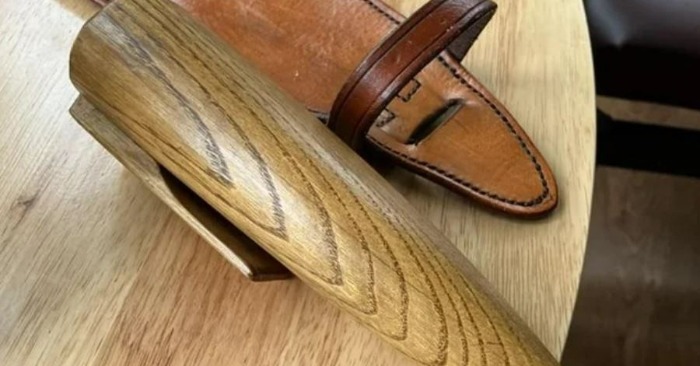
Long before electric sharpeners and disposable blades became common, keeping tools sharp was an essential part of everyday life. Farmers, carpenters, blacksmiths, and tradesmen relied on whetstones to maintain their knives, axes, and chisels. But there was another item that quietly played an equally important role — the whetstone holder.
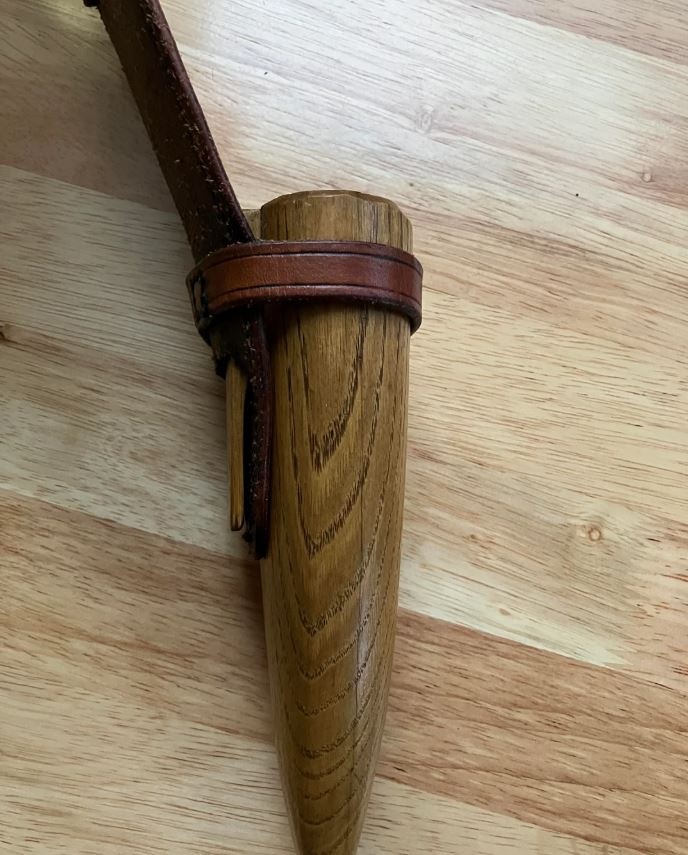
At first glance, a whetstone holder may look like a simple wooden case with a leather cover. In reality, it was a practical tool designed to protect valuable sharpening stones from damage while making them easy to carry from one job to the next. Without it, a whetstone could easily chip, crack, or become lost among other tools.
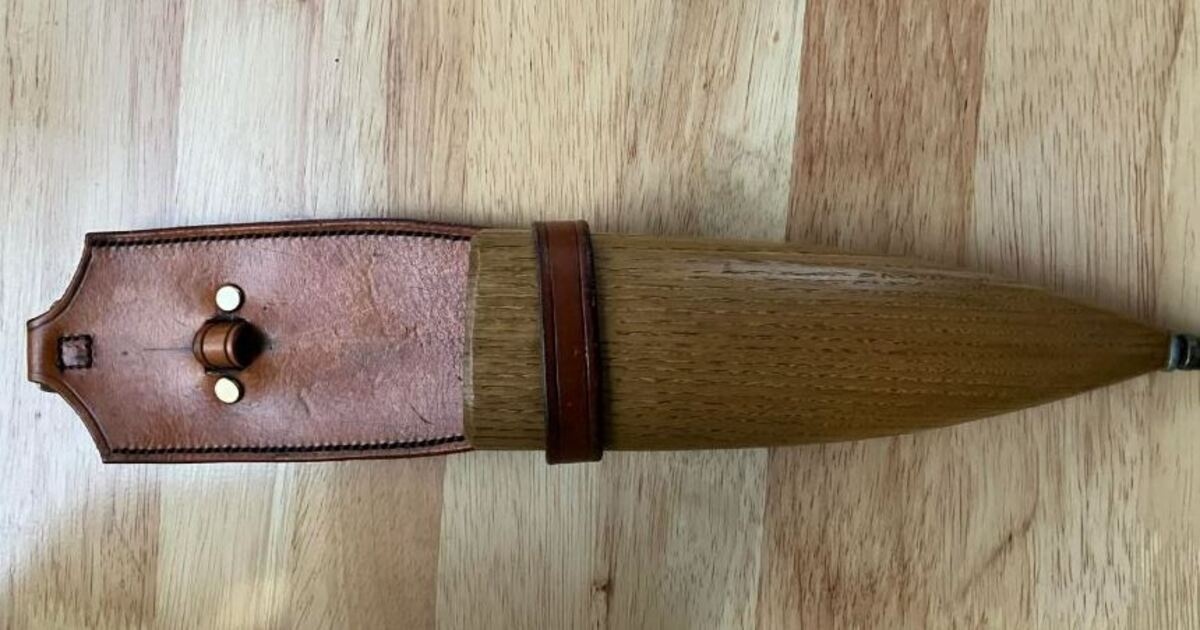
Many of these holders were handmade from durable hardwoods such as oak, ash, or hickory. Thick leather caps, often stitched by hand, kept the stone secure inside. Some even featured brass or steel fittings for added strength and durability. The result was a tool that combined functionality with craftsmanship.
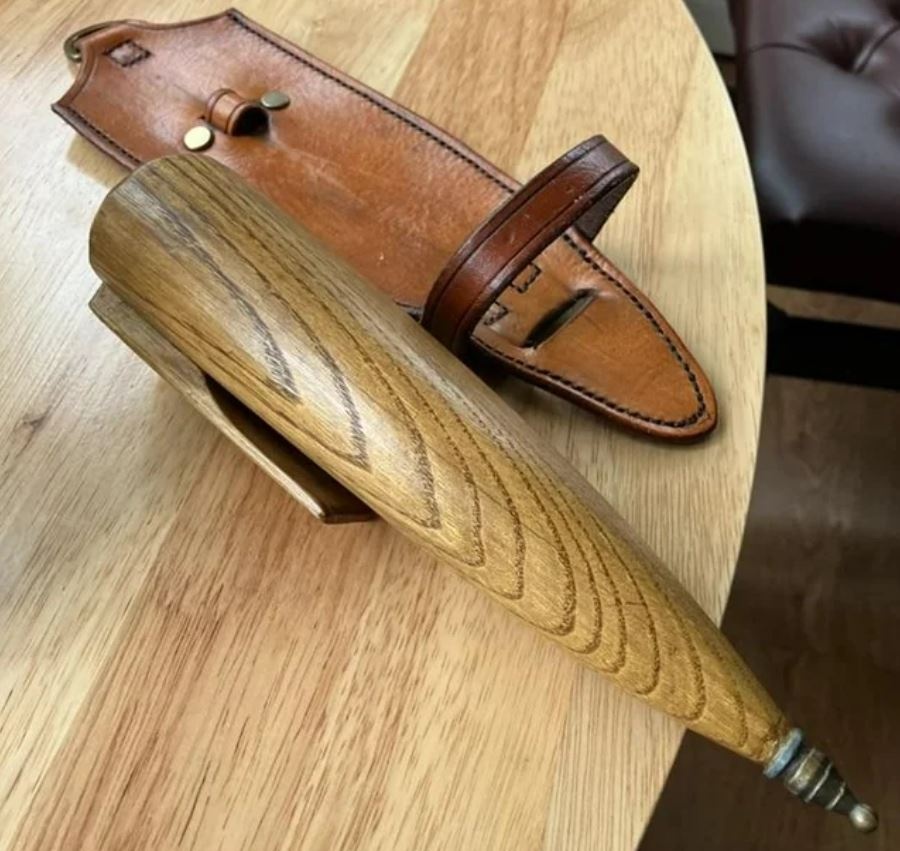
For workers whose livelihoods depended on sharp tools, a whetstone holder was often attached to a belt, hung in a workshop, or kept within easy reach in a toolbox. A dull blade could slow down work and create safety risks, making regular sharpening an important daily routine.
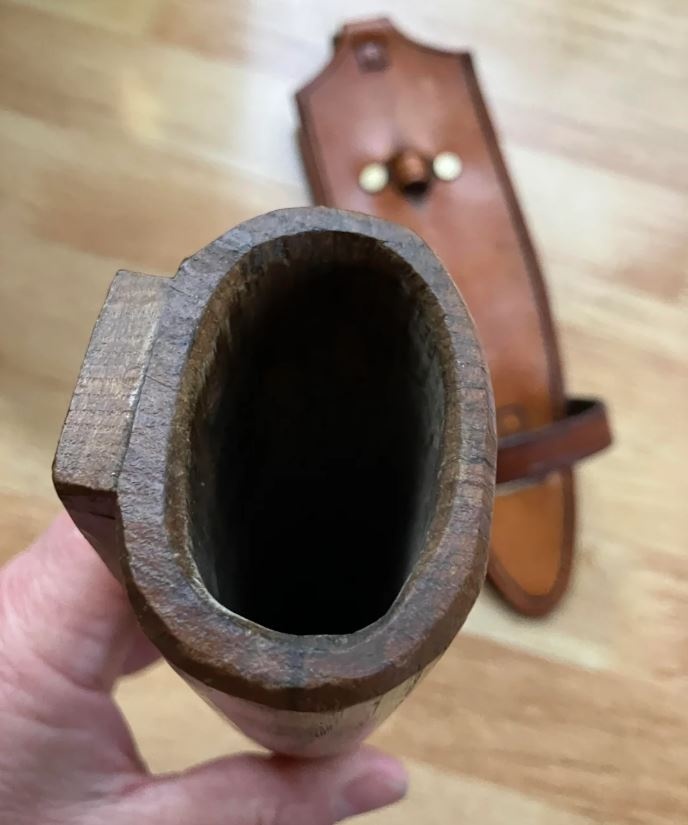
Today, antique whetstone holders are admired not only for their usefulness but also for the skill that went into making them. Their worn wood, aged leather, and handcrafted details tell the story of a time when tools were built to last for generations rather than years.
Collectors frequently discover them at estate sales, antique stores, and flea markets. Some display them as decorative pieces, while others continue to use them for their original purpose. Either way, they serve as a reminder of a slower era when craftsmanship and maintenance were valued as much as the work itself.
In a world filled with disposable products, the humble whetstone holder stands as a symbol of practicality, durability, and pride in one’s tools. It may seem like a simple accessory, but it represents a forgotten tradition that helped generations of craftsmen keep their edge.