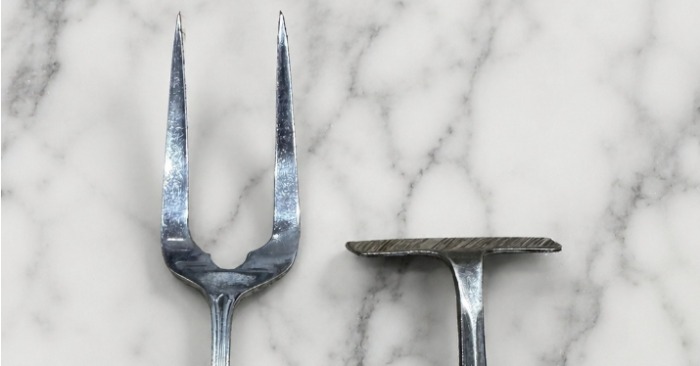
At first glance, the object looks completely confusing. Some people think it is a tiny cheese scraper. Others guess it belongs in a sewing kit or an old toolbox. But this oddly shaped piece of metal with a flat blade and short handle once had a very specific purpose at the family dinner table.
It was called a food pusher.
In the Netherlands, people often referred to it as an “eetschuif” or “schuivertje,” which roughly translates to “little food shover.” And honestly, that description explains the tool perfectly. Children used it to push food onto their forks or spoons before they were old enough to safely handle knives during meals.
The design was surprisingly simple. A child would hold a fork or spoon in one hand and use the food pusher with the other to guide peas, potatoes, beans or chopped vegetables into place. The flat metal end acted almost like a tiny shovel, helping prevent food from sliding all over the plate. Parents especially appreciated it during meals involving peas — probably because peas seemed determined to escape in every direction possible.
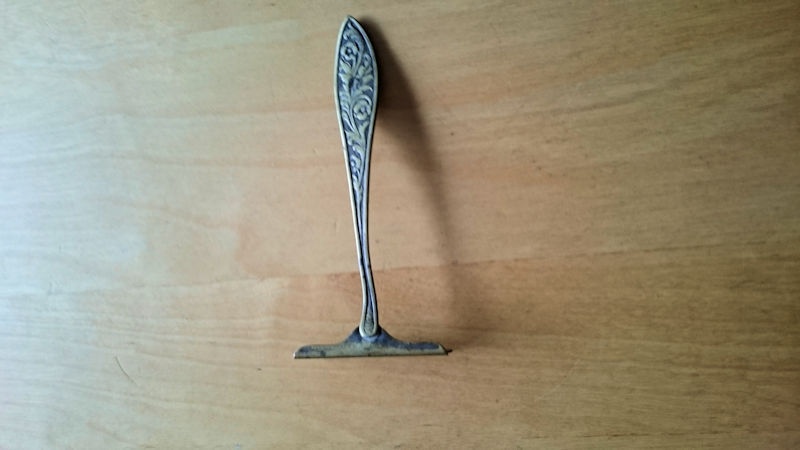
What makes these old-fashioned tools so charming today is how grown-up they looked. Many food pushers were made from stainless steel or silver plate and often came as part of matching children’s cutlery sets with miniature forks and spoons. Some even featured decorative floral handles or elegant engraved patterns, showing how seriously table manners were once taken inside many households.
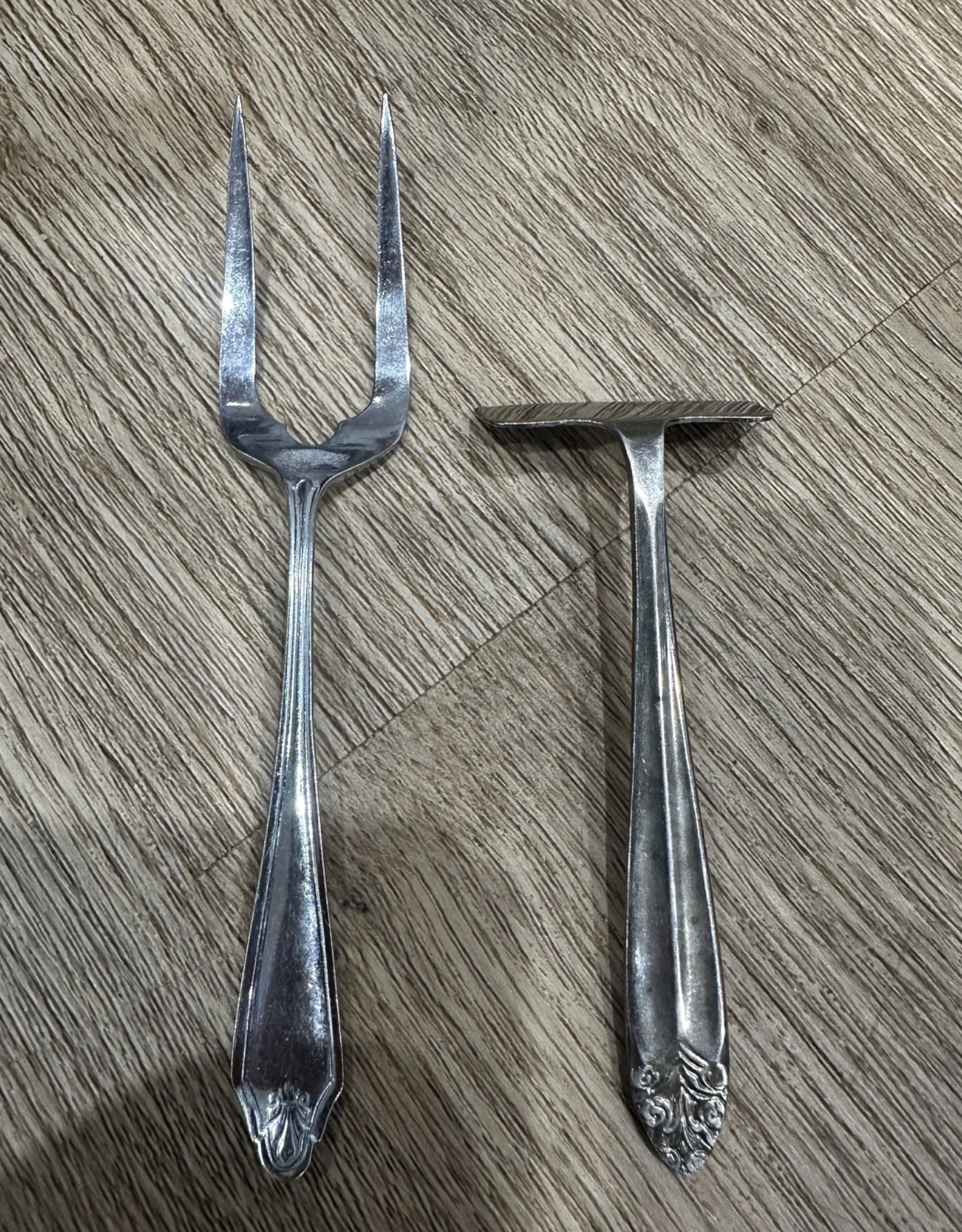
The food pusher also served another important purpose: safety. Using a knife requires coordination that very young children often do not yet have. Instead of handing kids sharp blades, families gave them these harmless little tools to help them learn proper dining habits step by step. In a way, they worked like training wheels for formal table manners.
Over time, however, the food pusher slowly disappeared from kitchens. Plastic cutlery became more common, casual family dining replaced formal meal traditions and child-safe knives took over the job. Eventually, the tiny metal tool lost its place in kitchen drawers and became one of those mysterious household objects younger generations no longer recognized.
Today, food pushers mostly reappear in antique shops, flea markets and forgotten family cutlery boxes. And every time someone discovers one, the guessing game starts all over again. A scraper? A butter tool? A tiny kitchen spatula? Few people immediately realize the truth — that this strange little object once helped generations of children chase runaway peas around their dinner plates.