The day their father’s will was read, her siblings divided a fortune. She was left with an old horse nobody wanted. They laughed at her right there in the notary’s office. They called her the useless one in the family. What they did not know was that the animal carried something her father had hidden for thirty years. And when she uncovered it, they would regret every laugh. The day Don Aurelio Mendoza, the richest man in the Jalisco valley, was buried, it rained as if the sky itself were mourning him.
Three days later, his four children sat before the notary to hear the will. Natalie, the youngest, took the chair farthest from the door. She had no idea that by the end of that afternoon, her life would be unrecognizable. The gray-haired notary with thick glasses opened the sealed envelope and began to read. Ricardo, the eldest, inherited two hundred hectares of fertile land and the main bank accounts. Emilio, the second son, received the entire cattle operation, more than one hundred fifty head worth millions.
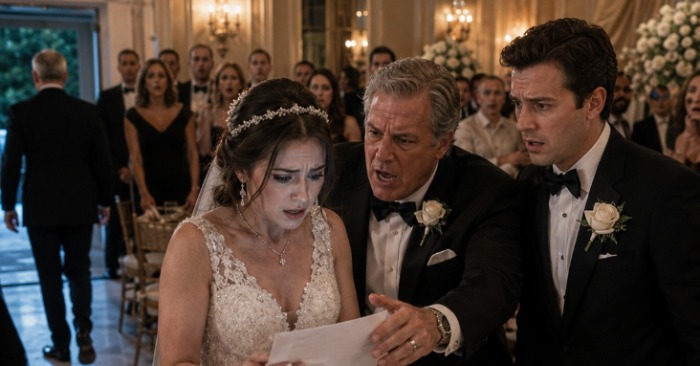
Fernanda, the only other daughter, was left the thoroughbred horse business, thirty registered animals, and the facilities of the main ranch. “And to my daughter Natalie,” the notary read in a measured tone, “I leave Tormenta.” Ricardo was the first to laugh. He slapped the table and let out a loud cackle that filled the office. Emilio leaned back in his chair with a mocking grin. “The crazy horse, that’s all?” Ricardo said, barely able to contain himself.
Fernanda looked at Natalie with cold calculation. “You should sell him for meat before he dies of old age and costs you a burial.” Emilio stared straight at her. “Dad always knew you were the useless one, that’s why he left you the only thing that was worthless.” The notary had to call for silence three times. Natalie felt the air leave her lungs. She did not cry. She did not answer. She sat frozen while her siblings signed papers and divided up properties she had never even known existed.
When she left that office, she did not even have enough money to transport a horse nobody wanted. She had no home of her own, no savings, nothing except the last words her father had whispered to her in the hospital, words she had not understood then. “Take care of him the way I took care of you, and he will show you what nobody else can see.” Natalie walked three kilometers in the rain until she reached the ranch where Tormenta had spent the last ten years.
The horse stood in a distant corral, separated from the rest like some sickness nobody wanted spreading. He was large and dark-coated, scarred and rough. He was eighteen years old and had a reputation that frightened everyone. He had kicked three professional trainers, bitten a veterinarian, and smashed wooden fences as if they were paper. The ranch hands called him the devil and crossed themselves whenever they passed him. Natalie watched him from outside the fence.
The animal stared back with suspicious eyes, snorting, ears pinned back, ready to strike if needed. “Miss Natalie.” The voice came from behind her. It was Vicente, her father’s old foreman. He was seventy, bent from a lifetime of labor, with hands that understood land better than any book. “Vicente. I didn’t expect to see you.” The old man nodded. “Your father asked me to be here when you came for him.” Natalie frowned. “He knew I would come?” Vicente nodded slowly. “Don Aurelio knew many things.”
He told her he had promised her father he would help her, but that he was forbidden to explain why until she discovered it herself. He had brought a trailer and knew of a borrowed plot of land where the horse could stay for a while. Natalie understood almost nothing. Her father had planned all of this. Vicente had instructions. And the horse everyone despised was somehow part of a secret she was meant to uncover alone. The questions piled up with no answers. “Why would my father do this?” Vicente only replied, “Because he knew you better than you know yourself.”
The borrowed land sat on the edge of town, with a tin shack, no electricity, and no running water. It belonged to a distant cousin of Vicente’s who had gone north for work and was not expected back anytime soon. Natalie settled Tormenta into a makeshift stable built from old lumber and tarps. The first day was a disaster. The horse kicked the fence so hard that three boards flew off. A neighbor came over shouting that if the animal broke loose again, he would call the authorities. Natalie apologized, promised to reinforce the pen, and held back tears until he left.
That night she slept on the floor of the shack with her jacket under her head. Cold crept in through every crack. Outside, Tormenta slammed against the stable walls as if he wanted to tear the whole world apart. At three in the morning, Natalie finally broke down. She sat in a corner and cried for the first time since her father’s funeral. She cried over the humiliation at the will reading, over the years she had spent caring for Don Aurelio while her siblings appeared only when they needed money, and over the fact that she did not understand why this was the life she had been handed.
When she finally calmed, she looked toward the stable. Tormenta had stopped pounding. For a second, she thought the horse had heard her. “What are you hiding?” she whispered into the dark. “Why did my father choose you for me?” The horse gave no answer. But in that moment Natalie knew she would not give up. Not out of pride and not out of stubbornness, but because something in her father’s words told her there was more to this story. And she would uncover it, no matter what it cost.
Three months earlier, Don Aurelio Mendoza had been lying in a hospital bed attached to machines that tracked the weakening rhythm of his heart. Doctors had given him only weeks. His older children came and went, signing papers and discussing inheritance in the hallways. Natalie was the only one who arrived every morning at seven and stayed until the nurses forced her to go home at night. One day, he was more lucid than usual. He asked her to close the door and sit closer.
“Do you know why I never sold Tormenta?” he asked in a hoarse voice. Natalie said no. He squeezed her hand with the little strength he had left. “Because that horse is worth more than any land I own, more than the cattle, more than the money in the bank. But only to the person who knows how to see him.” Natalie did not understand. Everyone said the horse had gone mad and had not allowed anyone to ride him for years. Her father gave a faint smile. “People only see what they want to see. You’ve always noticed what others ignore. That’s why I’m leaving him to you.”
Natalie tried to protest. She did not need a horse. She needed security. But he cut her off. “Take care of him the way I took care of you, and he’ll show you what nobody else can.” Then, just before drifting off, he softly sang a lullaby, the same one he had sung to her as a child. When he finished, he squeezed her hand one last time. “Remember the song, daughter. Tormenta knows it too.”
Two weeks after settling into the borrowed land, Natalie saw a luxury truck pulling up, raising dust all along the road. Even before it stopped, she knew who it was. Fernanda stepped out in heels that sank into the dirt and sunglasses she did not need under the cloudy sky. She did not bother with a greeting. “I came to make you an offer,” she said. “Fifteen thousand pesos for the horse. More than he’s worth, honestly, but I feel sorry for the way you’re living.” Natalie kept feeding Tormenta and did not turn around. “He’s not for sale.”
Fernanda looked around the tin shack, the dry ground, the patched stable. “You have no electricity, no water, no real roof. With that money, you could rent somewhere decent for a while.” Natalie still refused. Then Fernanda’s softness vanished. “That animal is going to end up in a slaughterhouse anyway. At least with me, it would be quick.” Natalie finally turned and asked the only question that mattered. “Why do you care so much about a horse you say is worthless?” Fernanda hesitated for barely a second, then covered it with another cruel smile. “Think about it. In a week, the offer drops.”
Three days later, Ricardo appeared. Unlike Fernanda, he arrived on foot, carrying a manila envelope and wearing a smile that tried too hard to look kind. He said he came in peace and only wanted to help. Then he opened the envelope and showed her cash, far more than Fernanda had offered. Natalie stared at the money. It was more than she had ever seen in one place. “Why so much for a horse that means nothing?” Ricardo’s smile stayed on his mouth but never reached his eyes. “Not because the horse matters. Because you do. Dad left you with a burden, and I want to help you start over.”
Natalie asked what would happen if she said no. Ricardo’s smile vanished. He slowly closed the envelope. “Then you’ll end up begging us. That horse will ruin you, and when you’ve got nothing left, you’ll remember this moment.” He turned to leave, then paused long enough to add one more thing. “And be careful with Vicente. That old man has secrets.” Natalie watched him walk away with her heart pounding. First Fernanda, then Ricardo. Both of them wanted the horse far more than made sense. Which meant the horse was not worthless at all.
One violent night, a storm tore over the valley. Wind battered the shack, rain forced its way through every crack, and thunder shook the ground. Tormenta went wild. His screams mixed with the thunder, and his kicks threatened to destroy the flimsy stable. Natalie knew that if he got loose in that weather, she might never find him again. She grabbed a flashlight and ran through the rain. The moment she opened the stable door, the horse lunged in terror. She barely avoided a deadly kick.
She shouted for him to calm down, but he was trapped inside his own panic, circling, striking, trying to flee his own body. Then she remembered what her father had said. Remember the song. Tormenta knows it too. Without thinking, she began to sing the lullaby. Her voice trembled, almost swallowed by the storm, but she kept going. Slowly, Tormenta stopped kicking. His ears came forward. The fear drained from his eyes. Natalie kept singing as she moved closer, hand outstretched. This time he did not bite, strike, or retreat. For the first time in ten years, he allowed someone to touch him.
She laid a hand on his rain-soaked neck, and the horse lowered his head and leaned against her chest. In that instant, she understood that her father had planned far more than a strange inheritance. He had left her a bridge, a key, and a test all in one. Something changed between her and Tormenta that night, and she knew she was only beginning to understand why her father had trusted her with him.
The next morning, Vicente arrived with feed, tools, and hot coffee. He found Natalie brushing Tormenta in quiet, steady strokes. The old foreman stopped in the doorway and crossed himself. “I never thought I’d see this.” Natalie told him about the song. Vicente said her father had sung it to Tormenta for years and had been the only one the horse trusted. When Natalie asked what had turned the horse so violent, Vicente admitted he did not know everything. Only that ten years earlier, Don Aurelio had shut himself in the stable with Tormenta for three hours, and after that day, the horse had never been the same.
He only gave her one hint. “Look at that horse the way your father did. Patiently. Carefully. With love. He’s hiding something your siblings must never find.”
Emilio came next, and unlike the others, he did not hide the threat. He arrived with two strangers in a black truck and announced that the land was about to be sold. He claimed the owner was in debt and already willing to sign. Natalie stepped between him and the stable. Emilio moved closer until his face was inches from hers. “That horse will belong to me. One way or another.” Vicente appeared behind them gripping a rusted shovel like a weapon and ordered them to leave. As Emilio backed away, he warned Natalie that in two weeks, nobody would be able to protect her anymore.
That same week, while cleaning Tormenta’s rear left hoof, Natalie noticed something unusual on the horseshoe. What looked like scratches turned out to be a deliberate engraving under the rust. She cleaned more carefully until letters and numbers appeared. BNG-1987-24-58-3-19-41. She ran to Vicente, who went pale as soon as he saw it. “Banco Nacional de Guadalajara,” he whispered. “Your father had a private vault there. I knew it existed, but not what was inside.” Natalie stared at the hoof and then at the old man. Her father had hidden a bank code inside the shoe of the horse nobody dared touch.
The next morning, she took a bus to Guadalajara with the code in her pocket, three hundred pesos Vicente had lent her, and an old photograph of her father. The bank was an old stone building in the historic center, the kind of place built to keep secrets safe. At the desk, the receptionist almost dismissed her until she recited the code. Then everything changed. She was made to wait for hours before an older man in a gray suit came to escort her downstairs. In the elevator, he told her the account had been active for thirty years and had been paid on time every month. No one had ever come to claim it.
The vault door opened onto a small steel box, a yellowed envelope, and a black leather journal. Natalie opened the envelope first. It was a letter in her father’s handwriting. He told her that if she was reading it, it meant she had done what he asked. She had cared for Tormenta when everyone else despised him. What was in the box belonged to her, not because of blood or law, but because of who she was. He warned her that once she learned the truth about her siblings, she must not let hatred consume her.
Inside the box were folders filled with deeds, contracts, and official documents. Seventeen properties in five states. Warehouses, land, apartments, commercial buildings, even another ranch. All of it belonged to a company called El Legado del Valle, and the only beneficiary was whoever presented the original access code to the vault. Natalie did a rough calculation in her head. The total value was well over one hundred million pesos. But the biggest revelation had not even come yet. It was inside the leather journal.
The first entries were fifteen years old. Her father had documented everything. Ricardo had forged his signature to steal millions from bank accounts. Emilio had been secretly selling cattle for cash through illegal channels. Fernanda had taken advantage of their mother’s Alzheimer’s, making her sign papers she no longer understood and stealing jewelry meant for Natalie. Don Aurelio had spent years collecting proof. Bank records. Witnesses. Photographs. Investigators. It was all there. He could have exposed them publicly while he was alive, but he had chosen not to destroy the family then. Instead, he had hidden the real inheritance where only Natalie could find it.
One marked section in the journal held a different kind of truth. Don Aurelio wrote that when Fernanda was born, he had his doubts. Years later, he secretly confirmed them. Fernanda was not his biological daughter. He had raised her as his own anyway and never revealed it. Natalie’s hands shook as she read. The woman who had humiliated her the most, who had spoken as if she were above everyone, did not even share Don Aurelio’s blood. The page mentioning the identity of Fernanda’s real father had been partially torn, but the message was clear. Her father had carried that secret for four decades.
When Natalie left the bank with the documents, the deeds, and the journal hidden in a cloth bag, she no longer felt like the girl who had walked in. She had the true inheritance now, and the proof of every betrayal. The question was what she would do with it. By the time she got on the bus home, she had made her decision. She would not run. She would claim every property and every right her father had left her. If her siblings wanted war, they would get one.
Her lawyer, Rodrigo Fuentes, was young but sharp. When he saw the contents of the box, he was stunned. Everything was legal. Everything had been structured years earlier. He explained that transferring the properties should be straightforward unless her siblings objected. Natalie knew they would. Still, she chose not to use the journal yet. That would be her defense only if they attacked first. A week later, official notices reached Ricardo, Emilio, and Fernanda, informing them that seventeen properties had been transferred to Natalie as sole beneficiary of El Legado del Valle.
The three of them gathered that same day, furious and stunned. Ricardo wanted to challenge the documents in court. If the legal route failed, he hinted, there were other ways to solve the problem. The lawsuit came quickly. They accused Natalie of fraud, forgery, and manipulating their father while he was mentally weak. Natalie was not surprised. She stood beside Tormenta reading the accusation while the late afternoon sun lit the page calling her a criminal. She only told Vicente, “I knew they’d do this.”
The court hearings began in Guadalajara. Their lawyer presented false testimony claiming Don Aurelio had not been in his right mind in his final years. Natalie’s lawyer responded that the disputed properties had been purchased decades earlier, when he was perfectly competent, and were all lawfully registered. The judge set dates for evidence. The war had officially begun.
Behind the scenes, her siblings grew more desperate. Fernanda paid for fake witnesses and asked their lawyer to destroy Natalie’s credibility any way he could. Ricardo tried to bribe Vicente to testify against Natalie, then threatened to expose the existence of the son Vicente had abandoned thirty years earlier. The old man admitted the truth to Natalie in tears. He had once had a child with a woman from town and had been too cowardly to claim him. Ricardo now wanted to use that shame against him. Natalie took his hands and told him he would not lie for them. If the truth came out, they would face it together.
Emilio lost patience entirely. One night, he came with gasoline and set fire to the stable. Tormenta woke first, screaming and slamming his hooves against the walls. Natalie nearly suffocated in the smoke before Vicente broke through the back wall with an axe and dragged her out. Then he went back in for the horse. Tormenta emerged alive but badly burned, his left side scarred forever. Natalie wept beside him and swore they would pay. The police quickly concluded the fire was intentional. They found traces of accelerant and the discarded containers. But Natalie held her accusation until her lawyer could build the case properly.
A week later, Lorena, Ricardo’s wife, arrived in a taxi. She said she was not there on his behalf but in spite of him. She had recordings on her phone. Months earlier, while Don Aurelio was still alive, Ricardo had tried to bribe a doctor to speed up his death so the inheritance would come sooner. The doctor refused, but Lorena had saved the conversation. She wanted protection for herself and her children in exchange. Natalie gave her her word. When Natalie heard the recording that night, she felt sick. Her own brother had tried to hasten their father’s death. It had failed, but the intention was clear and monstrous.
Then came the hearing where her siblings tried their boldest move. Their lawyer presented what he claimed was a DNA test proving Natalie was not Don Aurelio’s biological daughter. The courtroom erupted. Natalie felt the floor vanish beneath her. For three days she barely slept. Then Fuentes uncovered the truth. The lab named on the report had been closed for two years, and its owner was in prison for fraud. The paper was fake. More than that, the payment trail led back to a company controlled by Fernanda. Her sister had paid for forged medical results to strip her of the inheritance.
Still, the accusation shook Natalie deeply enough that she returned to her father’s journal and searched it page by page. Hidden inside the cover, she found three folded sheets. On them, Don Aurelio had finally written the full truth. Fernanda was not his child. Her real father had been Joaquín Paredes, a foreman who had once worked for him. Don Aurelio had discovered the affair, confronted his wife, paid the man to disappear, and chosen to raise Fernanda as his own. The final note was addressed directly to Natalie. He told her he had never once doubted that she was his daughter. He had hidden the original DNA proof in the safe in his office, behind the dusty bookshelf nobody ever used. The combination was Natalie’s birth date.
The next morning, Natalie went to the main house while her siblings were away. She opened the old safe and found the original test, plus another letter. Don Aurelio explained that Tormenta had never been just a clue. He had been a filter. Any of Natalie’s siblings would have sold the horse in the first week. Only someone with patience and love would care for a wounded creature everyone else wanted dead. Only that kind of person would clean the hoof closely enough to uncover the truth. By saving Tormenta, Natalie had proved she deserved everything.
On the final day of the trial, the courtroom was packed. Reporters, neighbors, and curious strangers filled every seat. Natalie entered in the same white blouse she had worn to the earlier hearing, but this time she walked differently, with her head high. Her siblings looked exhausted. Fernanda’s makeup could not hide the dark circles under her eyes. Ricardo pretended calm, tapping his fingers against the table. Emilio looked like he wanted to bolt.
Natalie’s lawyer struck first. He proved the earlier DNA report was fraudulent, showed the money trail linking the forgery to Fernanda, and then requested that the court open the new government-certified DNA results already submitted under seal. Before the judge did that, Fuentes called one more witness: Lorena Mendoza. Ricardo stood up in panic, but the judge allowed her testimony. Lorena calmly told the court that Ricardo had tried to pay a doctor to accelerate Don Aurelio’s death and that she had recordings to prove it. The courtroom exploded into chaos.
When order was restored, the judge opened the envelope with the certified DNA results. He read aloud that Natalie Mendoza had a 99.97 percent genetic match with Aurelio Mendoza. Father and daughter. Verified. Natalie’s eyes filled instantly. Then the judge continued. Fernanda Mendoza showed zero percent compatibility. No biological relationship existed. Fernanda let out a broken scream and collapsed to her knees, sobbing that her father had loved her, that he had always treated her like his daughter. The judge had the guards restore order.
Then came the ruling. Natalie was declared the rightful owner of all properties belonging to El Legado del Valle. The lawsuit against her was dismissed in full. On top of that, the court ordered investigations into Ricardo, Emilio, and Fernanda for fraud, falsification of documents, attempted murder, and related crimes. Guards stepped forward. Ricardo shouted for his lawyer. Emilio resisted. Fernanda no longer had the strength. Natalie watched all three of them leave in handcuffs. She did not feel joy. Only a deep, hollow quiet where pain had lived for a long time.
Three months later, Natalie sat beside Tormenta on the ranch that now belonged to her. The legal battles were over. Ricardo and Emilio were facing criminal charges that would likely keep them in prison for years. Fernanda had disappeared from the state, unable to live with the truth of who she really was. Vicente remained by Natalie’s side, no longer as an employee but as family. Lorena had received the protection she was promised and was beginning again with her children.
There was only one thing left for Natalie to do. She opened her father’s journal to the very last page, the one she had saved for the end. Don Aurelio wrote that when Natalie was three years old and nearly died of fever, he had made a promise to God that if she survived, he would spend the rest of his life protecting her. She had lived, and he had kept that promise in every hidden deed, every page of the journal, every clue in Tormenta’s horseshoe. But he reminded her that the most important inheritance was not land or money. It was the kind of heart that loves without asking for anything in return. Her siblings had waited for his death. Natalie had waited for his recovery. That, he wrote, was the only difference that truly mattered.
Natalie closed the journal and pressed it to her chest while tears ran down her face. Tormenta, his burned side scarred forever, stepped closer and rested his head against her shoulder, as if he knew exactly what she needed. “We did it,” she whispered, stroking his neck. “Dad was right about both of us. Nobody else wanted us, but we had each other.”
The wind drifted across the valley carrying the scent of land that was finally hers. Somewhere beneath that wide sky rested her father, the man who had kept secrets for forty years to protect the only child who had truly loved him. Natalie stood and walked toward the main house with Tormenta following slowly behind her. There was still work to do, land to manage, a life to rebuild. But before stepping inside, she looked up one last time and whispered, “Thank you, Dad. For everything.”
The wind seemed to answer softly, like a hand brushing her cheek.