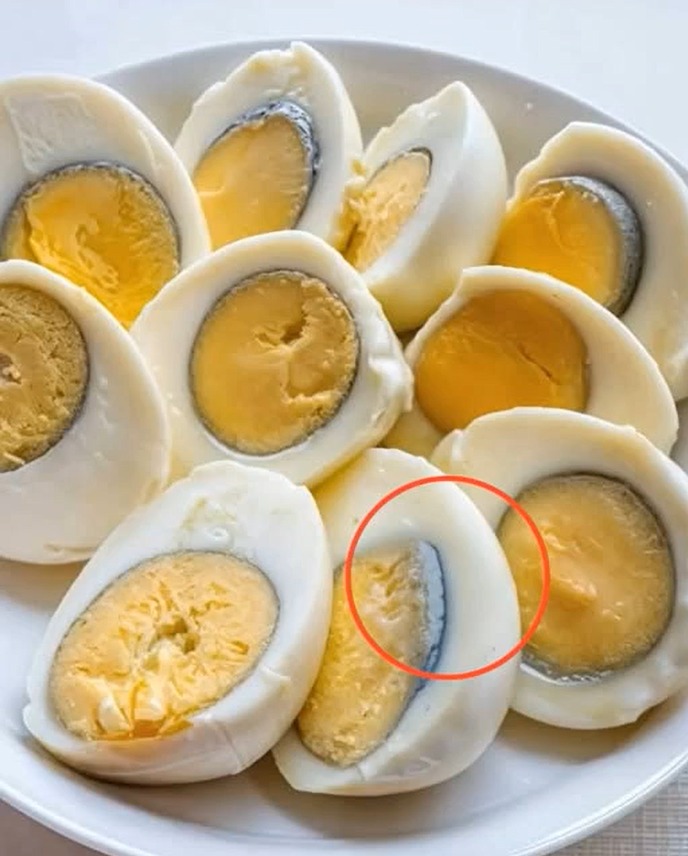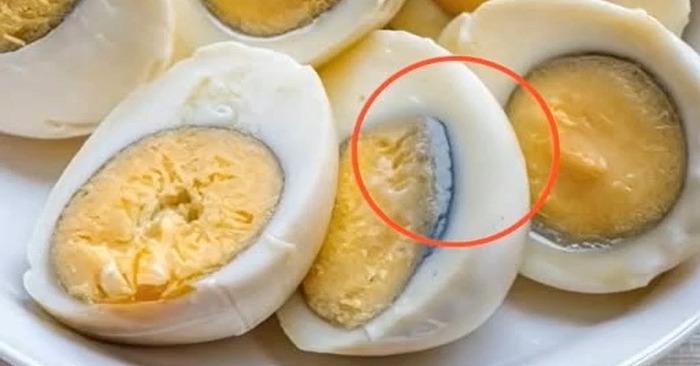
“The yolk had a green ring… and I almost threw it out.” 🥚😳 It looked wrong—like something had gone bad. But that eerie halo isn’t rot… it’s a reaction. What really causes it? And how can you make sure it never happens again? The answer’s simpler—and stranger—than you think. Full story in the article below 👇
Ever peeled a hard-boiled egg only to find a greenish-gray ring around the yolk? It might look off-putting, but don’t worry—it’s not rot or spoilage. That ring forms when sulfur from the egg white reacts with iron in the yolk, usually because the egg was overcooked.
The good news? It’s totally harmless—and totally avoidable.
Here’s how to cook perfect, ring-free eggs:
-
Start cold: Place your eggs in a saucepan and cover them with cold water, about an inch above the eggs.
-
Bring to a boil: Heat the pot over medium until the water reaches a rolling boil.
-
Turn off the heat: As soon as it boils, remove from heat, cover the pot, and let the eggs sit—about 9 minutes for soft yolks, 11–12 minutes for firm ones.
-
Cool down fast: Transfer the eggs to an ice bath for at least 5 minutes. This stops further cooking and makes peeling easier.
For easier peeling, crack them gently under running water. Slightly older eggs (5–7 days old) peel better, and adding a little vinegar or salt to the boiling water can help prevent cracking.
Store unpeeled eggs in the fridge for up to a week, and peeled ones for 2–3 days. And just like that—no more green rings, just perfectly cooked eggs every time.