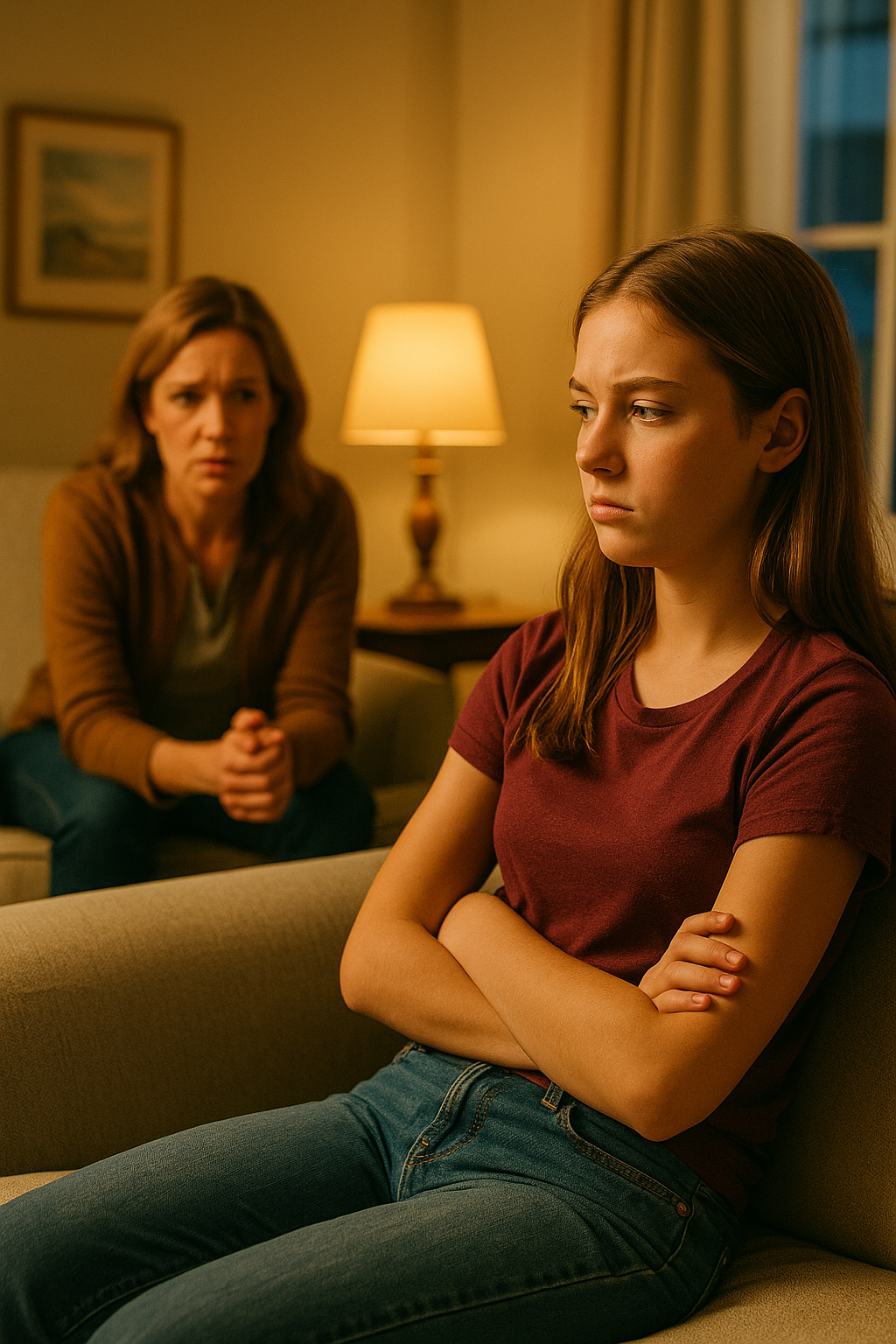
For months, 16-year-old Rachel had been living in near silence at home. She would come downstairs for dinner, eat without a word, and retreat back to her room. Her mother, Claire, begged her to talk. “Honey, please, just tell me what’s wrong,” she pleaded night after night. But Rachel only shook her head, her eyes cold, her lips sealed.
At school, Rachel seemed like any other teenager — laughing with friends, scrolling her phone. But at home, the silence was deafening. Claire confided to her sister that it felt like she was living with a stranger. “I don’t know my own daughter anymore,” she whispered through tears.
The tension grew worse. Rachel stopped answering even simple questions. When Claire tried to hug her, she pulled away. Finally, one night, after another failed attempt to connect, Claire snapped. “Why do you hate me? What did I do to you?” she shouted, her voice breaking.
Rachel finally looked at her — not with anger, but with something closer to pain. “You lied to me,” she said. It was the first sentence she had spoken to her mother in weeks.
Claire froze. “Lied? About what?”
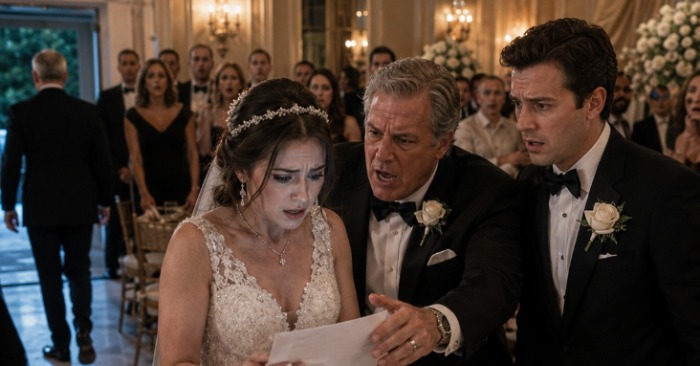
Rachel disappeared into her room and came back with a folded paper. It was a printed result from an online DNA kit her friend had talked her into doing. She had sent it off in secret, never expecting much. But what she discovered shook her world: the man she’d grown up calling Dad… wasn’t her biological father.
Claire felt the air leave her lungs. She sat down hard in a chair, her hands trembling. “Rachel… I was going to tell you one day,” she whispered. But the damage was already done.
Rachel’s voice cracked as she finally let out the storm of feelings she had bottled up. “All this time you let me think I was his daughter. He raised me, he loves me… and now I don’t even know who I am. How could you keep that from me?”
Tears streamed down Claire’s face. She admitted that years ago, before she married her husband, she had been in a brief relationship. She never told him she was pregnant, and when she and her husband fell in love, he chose to raise Rachel as his own. To him, she had always been his little girl — no difference, no question.
But to Rachel, the secret felt like betrayal. She couldn’t look at her mother without feeling deceived. That was why she had fallen into silence: she didn’t know how to process the truth.
In the weeks that followed, Rachel agreed to therapy, and her mother joined her. Slowly, painfully, they began to talk again. It wasn’t easy — the trust had been cracked wide open — but Rachel realized something important. The man who had bandaged her scraped knees, cheered at her school plays, and sat by her bed when she was sick was still her dad. Nothing in a DNA test could take that away.
And though her mother’s secret had hurt deeply, Rachel began to understand it had come from fear, not malice. Claire had wanted to protect her, to give her a stable life.
The healing was slow, but one night Rachel came downstairs, sat beside her mother, and whispered, “I’m not ready to forgive you yet… but I don’t want to lose you either.”
For the first time in months, Claire smiled through her tears. She reached for her daughter’s hand. “Then we’ll figure it out together.”