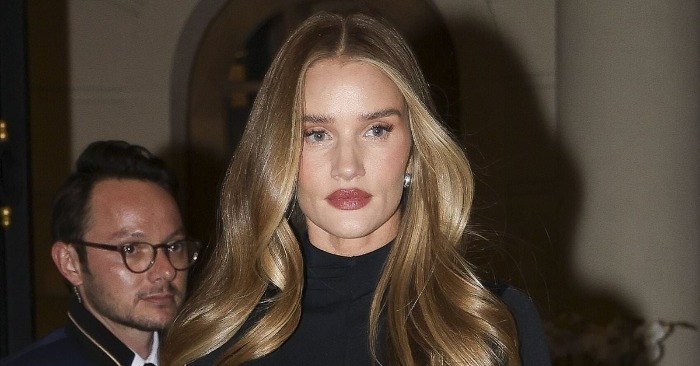
Sometimes it only takes one frame to stop the scroll. One clip. One close-up. And suddenly, social media is debating until midnight.
That’s exactly what happened after a recent public appearance by Rosie Huntington-Whiteley. Under harsh spotlights and unforgiving cameras, the supermodel appeared noticeably different from the polished, perfectly lit images fans are used to seeing. Within hours, screenshots were circulating, and one question dominated the conversation: what changed?

Those who follow beauty and fashion closely know this isn’t just idle gossip. It’s about perception — and the shock that comes when a familiar face looks unfamiliar. Viewers pointed out more pronounced cheekbones, lips that appeared fuller and less expressive, and a certain softness around the features. Some described her face as looking slightly swollen, others said her skin seemed less reactive to facial movement.

But the conversation says as much about us as it does about her.
For years, audiences have consumed carefully curated images — magazine covers, red carpet photos, campaign shots retouched to perfection. We’ve grown accustomed to seeing Rosie in ideal lighting, styled by the best glam teams in the industry. When reality intrudes — unfiltered, dynamic, imperfect — it can feel jarring.

Online, theories spread quickly. Was it the lighting? Fatigue? Natural aging? Cosmetic enhancements? Without any official comment from Rosie herself, everything remains speculation. There has been no confirmation of procedures — only visual impressions and personal interpretations.
What’s clear is that the moment tapped into something deeper: our collective attachment to flawless images and our discomfort when they shift. In an era obsessed with perfection, even the smallest perceived change can spark a storm.