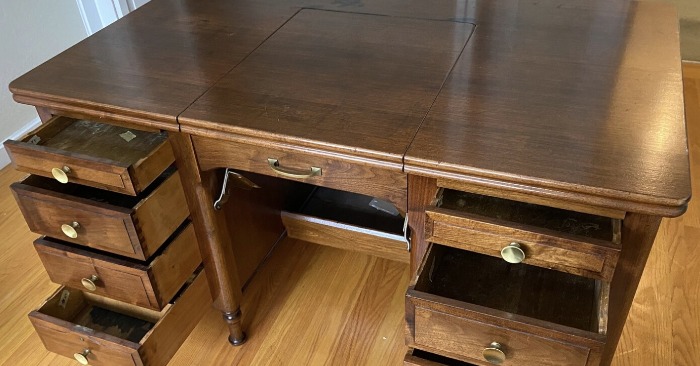
For decades, one piece of furniture quietly dominated offices across the country: the classic typewriter desk. At first glance, it looked like an ordinary wooden desk, but hidden inside was a clever feature that transformed the way people worked.
Built between the 1930s and the 1960s, these desks were designed to handle the demands of busy offices. Workers needed a sturdy surface for paperwork while also having quick access to heavy typewriters that often weighed more than 30 pounds. Rather than sacrificing valuable desk space, furniture makers came up with an ingenious solution.
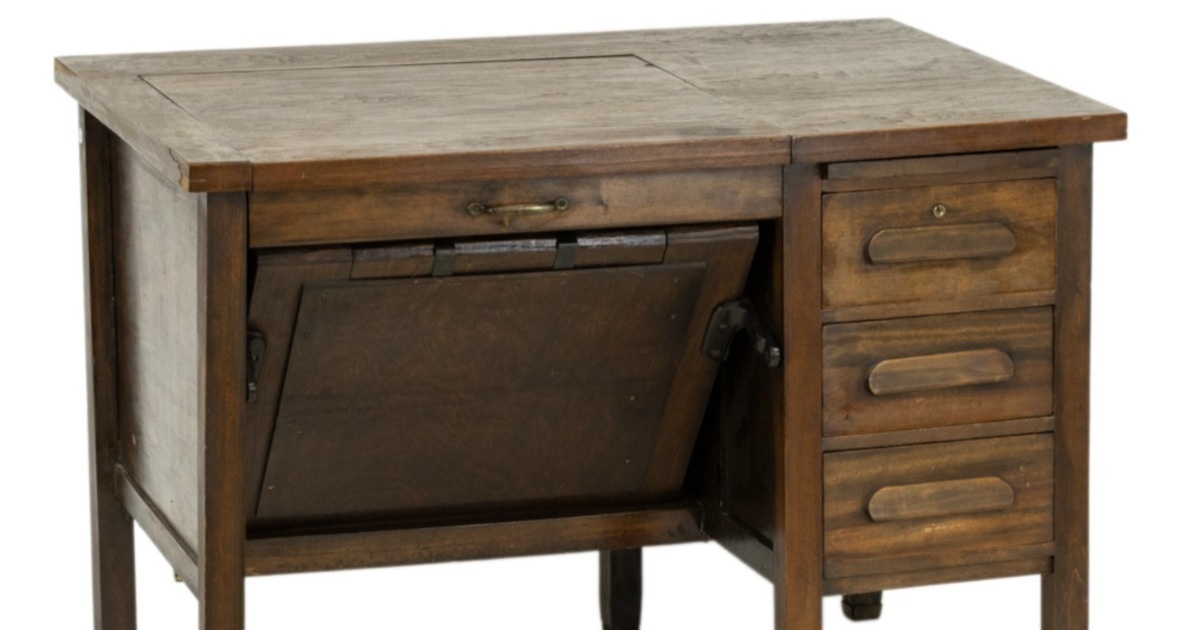
The secret was a concealed lift platform hidden beneath the desktop. With a simple pull, the typewriter would rise smoothly into position, ready for use. When typing was finished, the machine could be lowered back into the compartment, instantly turning the workspace into a clean writing desk once again.
This design helped office workers switch effortlessly between typing letters, organizing documents, and completing paperwork. It also kept desks tidy and protected expensive typewriters when they were not being used. For businesses, it was a practical solution that improved both efficiency and organization.

These desks were built to last. Crafted from solid wood and reinforced with durable metal hardware, they were designed for years of daily use. Drawers provided storage for paper, ribbons, envelopes, and office supplies, making the desk a complete workstation long before the modern computer desk existed.
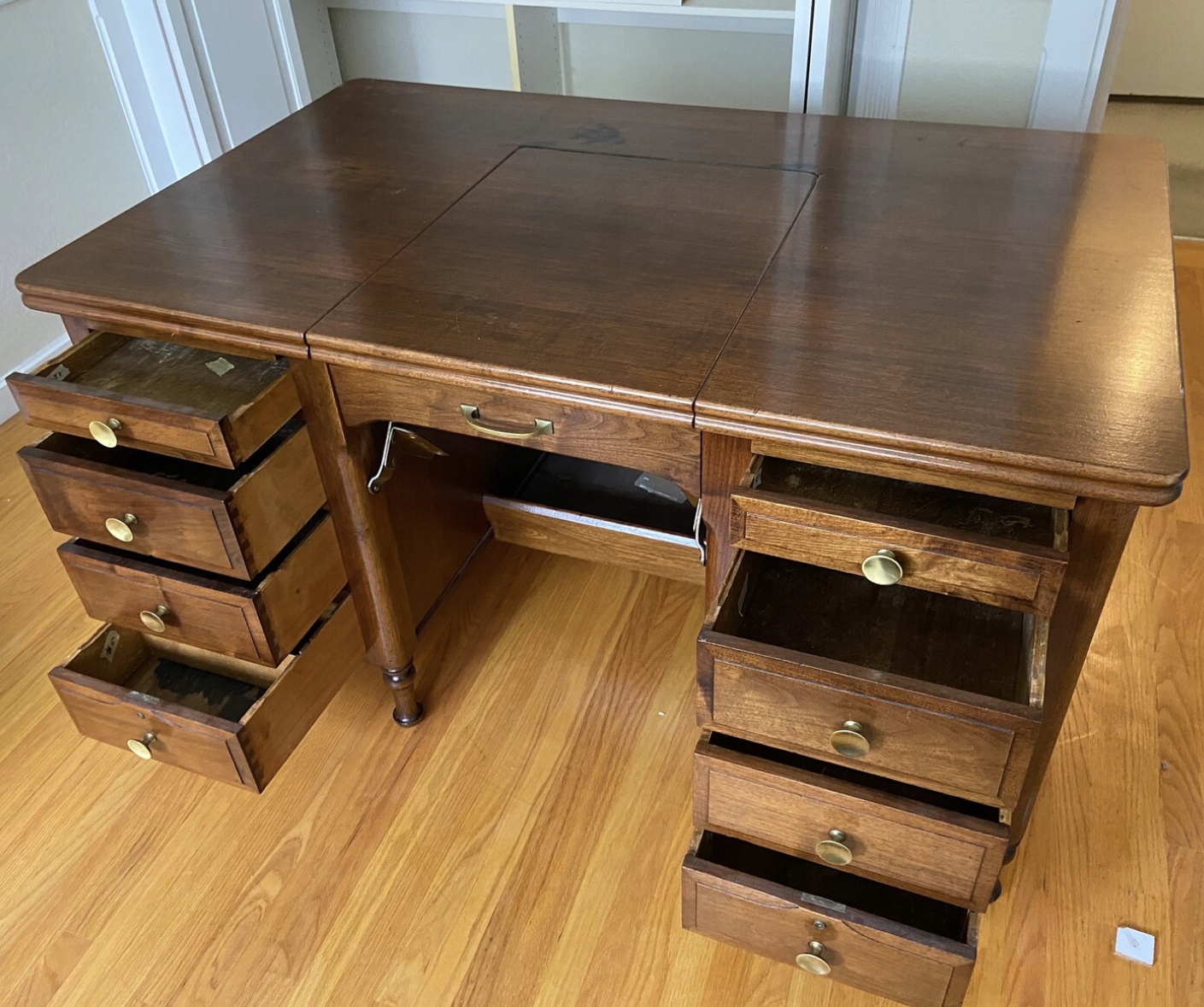
The typewriter desk became part of everyday office life. The rhythmic clacking of keys, the familiar bell at the end of each line, and the sound of the typewriter disappearing back into its hidden compartment created a routine that defined generations of workplaces.
Today, vintage typewriter desks have found a second life. Collectors restore them for antique typewriters, while others convert them into stylish laptop stations, craft desks, or statement pieces in retro-inspired homes. Their hidden feature continues to fascinate people, proving that some of the smartest designs were created long before the digital age.