I thought fate had given me one last opportunity to experience happiness, even if it would last only a few days. But just when I believed my story with my first love had ended forever, she left me a secret that transformed my life.
“Mom said you might pass out when you see what’s inside.”
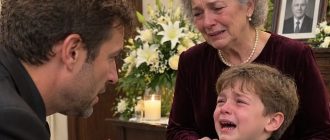
Her son stood outside the church holding a sealed envelope. We had just buried his mother, the woman who had become my wife only eight days earlier.
I glanced at the envelope. “What is that?”
He hesitated before answering. “There’s something about Mom you never knew. She wanted you to have this, but only after she passed away.”
With trembling fingers, I opened the envelope and unfolded the handwritten pages. I barely finished reading the first sentence before my knees weakened, forcing me to grab the church railing.
“Good heavens!”
Her son quickly reached for my arm. “Are you all right?”
I looked at him, completely stunned. “Your mother did WHAT?”
He smiled nervously. “She figured you’d react exactly like that.”
Even from beyond the grave, my wife had managed to surprise me. And believe me, astonishing a 63-year-old pastor isn’t particularly easy. But to understand what she left behind, I need to explain how our paths crossed again after nearly half a century.
For twenty-three years, I had served as minister of a small community church. Part of my work involved visiting seriously ill patients at the local hospital. Several times a week, I spent time with people nearing the end of their lives, offering prayers, companionship, or simply a sympathetic ear.
One Tuesday afternoon, a nurse mentioned that a woman with advanced cancer had recently been admitted.
“You’d enjoy meeting her,” the nurse said. “Yesterday she told her physician that his handwriting looked like a spider had crawled through spilled ink.”
I laughed. “She certainly sounds interesting.”
When I entered the woman’s hospital room, however, every trace of amusement vanished.
Time and illness had changed her appearance, but I recognized her immediately. Those eyes, that familiar smile—there could be no mistake.
“Margaret?”
She studied my face for a moment, narrowing her eyes. Then her expression brightened, and she burst into delighted laughter.
“Tommy? Is that really you? Oh, this is unbelievable!”
I stood speechless in the doorway.
She wasn’t about to tolerate that.
“Well, are you going to stand there all afternoon? Come give me a hug before I start charging you for the visit!”
Laughing through my disbelief, I embraced the woman who had captured my heart forty-five years earlier. For a brief moment, it felt as though the intervening decades had vanished.
We had been high school sweethearts. We attended our prom together, shared milkshakes at the local diner, and talked endlessly about the future we imagined building.
I had even promised to marry her someday.
She used to tease me, saying she’d consider accepting once we were old enough to know what we were doing.
But life took us in different directions.
We enrolled at separate universities. Our telephone conversations gradually became less frequent, and eventually we lost contact altogether.
There had been no betrayal, bitter argument, or dramatic farewell. We simply grew apart as our lives moved forward.
Years later, I married a wonderful woman, and we enjoyed thirty happy years together before she passed away six years earlier.
My first love had also married. Her husband was a kind man whom she adored, and together they raised a son. He had died four years before our reunion.
Neither of us had spent those decades waiting for the other. We had both experienced meaningful marriages and built lives of our own.
Nevertheless, seeing her again felt like discovering a cherished part of myself that I hadn’t realized was missing.
After that first meeting, I returned to the hospital every day.
We talked for hours, recalling childhood adventures, school dances, and the ridiculous things we’d done as teenagers.
Despite her illness, she hadn’t lost her mischievous sense of humor.
One afternoon, she suddenly asked whether I had finally learned how to make toast.
“I’ve become a reasonably capable cook,” I assured her.
She laughed.
“Tommy, the last time you prepared breakfast for me, the smoke detector nearly filed a complaint!”
Her son often joined us.
He was forty-two, worked as an accountant, and had clearly inherited his mother’s playful personality.
During one visit, I asked what kind of work she’d done throughout her life.
“Oh, a little of this and that,” she replied casually.
Her son snorted.
She immediately gave him a warning glance.
“Don’t you dare.”
I looked between them. “What’s so amusing?”
“Nothing important,” she answered quickly. “Tommy, do you remember what happened with the punch bowl at our prom?”
I groaned.
“I didn’t fall into the punch bowl!”
“You came home wearing enough punch to fill another one!”
Her son laughed, and I joined him.
At the time, I thought she was merely changing the subject to tease me.
Only much later did I realize she had deliberately avoided answering my question.
Several weeks after our reunion, she told me the doctors believed she might have only another week to live.
I sat beside her hospital bed, unable to speak.
The thought of finding her again after forty-five years, only to lose her almost immediately, was unbearable.
She reached for my hand.
“Oh, Tommy, stop looking so miserable!”
I tried to answer, but my voice failed.
Then she smiled.
“Remember when you promised to marry me when we were seventeen?”
I nodded, struggling to hold back tears.
“Well, you’re forty-five years behind schedule. Don’t you think it’s time you kept that promise?”
Despite everything, I laughed.
“Are you serious? You want us to get married?”
Her expression became tender.
“Yes, I do. I know it might sound unusual, but it would make me happier than anything. Will you marry me, Tommy?”
My heart ached.
I thought about the young woman I’d loved, the years we’d spent apart, and the unexpected gift of finding her again.
Then I answered without hesitation.
“Yes. Of course I’ll marry you!”
That evening, I went to the hospital chapel and knelt in prayer.
I didn’t ask for a miraculous recovery.
Instead, I asked for the strength to appreciate every moment we had left.
When I returned to her room, she immediately noticed my red eyes.
“You’ve been crying.”
“Just a little.”
She grinned.
“Wonderful! I was beginning to worry I’d lost my ability to make men emotional.”
Planning a wedding inside a hospital with only a few days available wasn’t simple.
I contacted the county clerk, completed the necessary marriage-license arrangements, and spoke with the hospital staff about holding a small ceremony.
A fellow pastor and longtime friend agreed to officiate.
I wore my usual church suit, which happened to be the nicest outfit I owned.
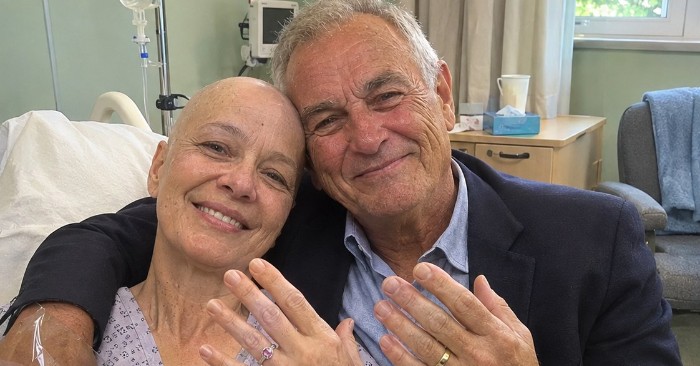
For our wedding bands, I visited a flea market and purchased two inexpensive rings.
Hers had a tiny pink heart.
When she saw it, she laughed so loudly that a nurse hurried into the room to check on her.
“Tommy! You bought our wedding rings at a flea market?”
“It was the prettiest one I could find!”
She held out her hand, admiring it.
“It’s absolutely perfect. The most beautiful ring I’ve ever owned.”
Then she winked.
“If anybody asks, tell them it’s a rare piece of Italian jewelry.”
“Is it?”
“Of course not, you silly man! But they don’t have to know that.”
Three days after she proposed, we were married in her hospital room.
Her son stood beside her, while my friend conducted the ceremony.
When I was asked whether I would take her as my wife, she interrupted before I could answer.
“Make sure he agrees to wash the dishes!”
Everyone laughed.
Then came her turn.
She looked directly into my eyes.
“I do, Tommy.”
Those three words were among the most precious I’d ever heard.
Over the following days, we spent nearly every moment together.
We held hands, prayed, laughed about our teenage years, and talked about the lives we’d lived while separated.
Five days after our wedding, she passed away peacefully while I held her hand.
The little ring with the pink heart was still on her finger.
I was devastated.
Yet beneath my grief was a deep sense of gratitude.
After forty-five years apart, fate had allowed me to find my first love again and become her husband, even if only for a handful of days.
I believed that was the final chapter of our story.
I was wrong.
After her funeral, her son approached me with the envelope she’d instructed him to deliver.
The opening words of her letter nearly sent me to the ground.
“Tommy, congratulations! You now own the business I’ve spent the past thirty years building. Please find somewhere to sit before you make a spectacle of yourself.”
I stared at the page.
“What business?”
Her son guided me toward a nearby bench.
“Keep going.”
I continued reading.
“You are now the proud owner of my bakery. Don’t panic—the muffins already know what they’re doing.”
I slowly looked up.
“Your mother owned a bakery?”
He nodded.
The business mentioned in the letter was one of the most popular bakeries in the county.
People lined up outside on Saturday mornings for its famous cinnamon rolls.
I’d eaten there countless times.
I had never imagined that the woman I’d loved as a teenager was its owner.
“She never mentioned it!”
Her son smiled.
“She said she wanted to know you were marrying her, not her cinnamon rolls.”
I laughed in disbelief and returned to the letter.
“My husband helped me establish the bakery many years ago. Our son has his own profession, and our wonderful manager understands the business better than anybody. I’ve already discussed everything with him, and he’ll help you figure it out.”
I shook my head.
“Why would she leave something like this to me?”
Her son pointed toward the final paragraph.
There was another instruction.
“Tommy, I’ve left something special for you at the bakery. Ask the manager about the toast.”
I frowned.
“The toast?”
Her son started laughing.
“Oh, you’re going to enjoy this.”
Two days later, I visited the bakery for the first time as its new owner.
The manager greeted me near the entrance.
“So you’re the famous Tommy.”
“I’m afraid so.”
She examined my face, then began laughing.
“Well, she certainly wasn’t exaggerating about your ears.”
I sighed.
“Wonderful. Apparently, my reputation got here before I did.”
The bakery was bustling with activity.
Customers ordered coffee, employees arranged fresh pastries, and the delicious smell of cinnamon filled the air.
The manager led me behind the counter and pointed toward the menu.
Halfway down the list, written in large letters, were the words:
TOMMY’S TERRIBLE TOAST
I stared at them.
“What on earth is that?”
She smiled.
“One of our most popular items.”
Beneath the name was a description:
“Delicious cinnamon toast inspired by the only boy who could burn bread and still persuade Maggie to kiss him.”
My face grew warm.
“She named something after me?”
“Many years ago.”
The manager handed me a serving.
It was delicious—sweet, buttery, and perfectly toasted.
Nothing like the disasters I’d produced as a teenager.
“She invented this recipe?”
“Yes. Although she always said the original version wasn’t nearly as edible.”
I laughed until tears ran down my cheeks.
Then the manager showed me a framed photograph hanging behind the counter.
It was a picture of my first love and me when we were seventeen.
Beneath it, she’d written:
“Some people are worth waiting for. Others should never be allowed near the stove.”
I stood staring at our young faces.
She had remembered my terrible cooking all those years.
And somehow, she’d found a way to keep that memory alive in the bakery she built with her husband.
But inheriting a successful business came with responsibilities I knew absolutely nothing about.
My first meeting with the manager and her son involved payroll, suppliers, equipment maintenance, operating expenses, and taxes.
The documents seemed endless.
“Would it help if I prayed over all these papers?” I asked.
Her son grinned.
“Only if your prayers come with accounting experience.”
Although we joked, I was genuinely frightened.
The bakery represented decades of hard work, and I couldn’t bear the thought of ruining something she’d loved so much.
For several days, I seriously considered selling it.
It seemed the safest solution.
Then I read her letter again.
This time, I noticed a message she’d written on the back.
“Tommy, never let fear make your choices. You’ve always been much braver than you realize.”
I sat quietly with those words.
Then I decided not to rush into anything.
Her son helped me understand the financial records, while the manager explained how the bakery operated.
I met the employees, learned their names, and gradually became more comfortable with the business.
During those conversations, I discovered another side of my wife.
For years, she’d quietly donated leftover bread to a nearby community center.
She had never made a public announcement about it.
She simply believed that good food shouldn’t go to waste while people were hungry.
I wanted to continue that generosity.
Our church had discussed creating a meal program for people who lived alone, but we had never developed a practical plan.
Suddenly, the bakery seemed like an answer.
One morning, I approached the manager with an idea.
“What if we used the kitchen to prepare meals for older people who don’t have anyone to eat with?”
She considered it.
“We could probably use the kitchen during quieter hours. But we’d need volunteers, ingredients, and a budget that actually works.”
I spoke with the church board and began recruiting helpers.
Her son calculated the expenses, and the manager worked on a menu we could realistically prepare.
Our first attempts were far from perfect.
Volunteers had conflicting schedules.
Food costs were higher than expected.
And preparing meals for thirty people turned out to be much more complicated than organizing an ordinary church gathering.
But we refused to abandon the idea.
Members of the congregation contributed money for ingredients.
The bakery staff helped coordinate kitchen time.
I organized transportation and deliveries.
We named the project Margaret’s Table.
Our first community lunch was scheduled for the day that would have been her sixty-fourth birthday.
On opening day, I arrived wearing an apron.
The manager took one look at me and appeared horrified.
“Please tell me you’re not planning to cook.”
“Absolutely not.”
She sighed with relief.
“Thank goodness. Our insurance probably wouldn’t cover that.”
We laughed before getting to work.
That afternoon, we served thirty-two meals.
One elderly gentleman told me he hadn’t shared lunch with another person in three weeks.
A woman explained that she’d come mainly because she wanted company, although she admitted the cinnamon rolls were reason enough to return.
Her son helped serve food and clear tables.
After the final guest left, I found him standing quietly in front of his mother’s photograph.
“Everything all right?” I asked.
He nodded.
“Mom would have loved seeing this.”
I smiled.
“She probably would have made fun of my apron.”
He laughed.
“Oh, without question.”
Just then, the manager approached carrying a small wooden box.
“She asked me to give you this when the time was right.”
I looked at it suspiciously.
“Another surprise?”
The manager smiled.
“She said you’d probably complain about that.”
Inside was another handwritten letter.
Apparently, my wife had decided that one farewell wasn’t nearly enough.
I unfolded the pages and began reading.
“Dear Tommy,
“If you’ve opened this letter, congratulations. You’ve finally figured out how to do something worthwhile with my bakery.
“I knew you’d be nervous about running it. You worry about absolutely everything, including whether your sermons go on too long. And yes, sweetheart, they do.
“But I also knew you’d eventually find a way to use this place to help people.
“My husband and I built the bakery together. He was a wonderful man, and I think the two of you would have gotten along beautifully. Especially because your cooking would have made him look like a professional chef.
“I loved the life I shared with him.
“And I loved having the chance to find you again.
“Becoming your wife was a gift I never thought life would give me.
“Please don’t spend your remaining years mourning all the time we didn’t have together.
“Instead, be thankful that somehow, after all those years, we found our way back to each other.
“Love isn’t something you finish giving, Tommy.
“Keep sharing it.
“Forever your loving wife,
“Margaret.
“P.S. If you ever rename Tommy’s Terrible Toast, I promise I’ll come back and haunt you.”
I carefully folded the letter.
Tears filled my eyes, but this time I was smiling.
Since her funeral, loneliness had followed me everywhere.
For the first time, standing in that bakery surrounded by people she’d cared about, I felt the weight of my grief grow a little lighter.
Six months later, Margaret’s Table was serving community meals twice every week.
The manager continued overseeing the bakery’s daily operations.
Her son helped with the financial records.
And I remained pastor of my little neighborhood church.
Every Saturday morning, I visited the bakery for coffee and a serving of Tommy’s Terrible Toast.
Sometimes I brought flowers to place beside her photograph.
Other times, I simply sat quietly and remembered her laughter.
One morning, her son joined me at my table.
“Do you think Mom knew we’d end up working together like this?”
I smiled.
“Your mother knew far more than she ever let anyone believe.”
He glanced at my plate.
“Going to order another piece of toast?”
“Of course.”
I looked toward her photograph.
“After forty-five years apart, she finally managed to get me back. Then she left me a bakery that serves a dish named after my greatest culinary failure.”
He burst into laughter.
And I laughed with him.
My first love and I never shared the lifetime we’d imagined when we were teenagers.
We didn’t grow old together.
We didn’t build the home we’d once dreamed about.
But she left me something I could carry forward.
She gave me a new connection to family, a purpose beyond my grief, and a place where lonely people could gather around a table and feel that they belonged.
I still wear the inexpensive wedding band I bought at the flea market.
Whenever someone orders Tommy’s Terrible Toast, I smile and remember the girl who loved me despite my disastrous cooking.
After forty-five years apart, she returned to my life for only a few precious days.
Yet the love she left behind continues to reach people I might never otherwise have met.
And these days, whenever I help serve breakfast, I make absolutely certain that nothing gets burned.