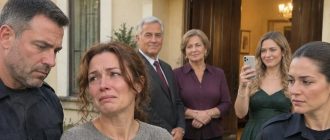
The doctor studied the genetic reports of our unborn babies, and his expression suddenly changed.
“My goodness. Do you understand what these results could mean for your children?”
I was five months pregnant, sitting beside my closest friend, whom I’d known for twenty-five years.
Three months earlier, we’d celebrated what seemed like the happiest news imaginable. We were both expecting babies and had deliberately selected the same sperm donor so our children could grow up as biological siblings.
It seemed like a wonderful plan.
But as the doctor continued examining the results, I began to fear that our decision had uncovered something our families had concealed for decades.
My name is Sarah Miller. I’m thirty-two, and my best friend and I have been inseparable since childhood.
We first met when I was seven and she was six. My family had just moved into the yellow house next door when she appeared at our door carrying two chocolate cupcakes.
“We’re going to be best friends,” she announced.
And she was right.
We grew up together, attended the same schools, celebrated birthdays, and shared secrets. Our mothers frequently joked that we behaved more like sisters than friends.
Sometimes, we wished we actually were sisters.
As adults, our plans for starting families became complicated. My marriage ended after five years, while my friend experienced several unsuccessful relationships.
One evening, while sitting on my balcony, she asked something unexpected.
“Why are we waiting for men before becoming mothers?”
I laughed and asked what she meant.
“We could have children ourselves. Together.”
She suggested something even more unusual: choosing the same sperm donor so our babies would be biological siblings.
After several discussions, fertility consultations, and careful research, we selected a donor listed under the name Daniel.
He was described as thirty-five, healthy, educated, and from a family with a positive medical history.
His profile photograph showed dark hair and striking gray eyes.
“Imagine our babies having those eyes,” my friend said excitedly.
We completed the necessary procedures and waited.
I became pregnant first.
Three weeks later, my friend called in tears.
“My test is positive!”
We screamed with happiness and immediately purchased two pairs of tiny baby socks, one yellow and one green.
Everything seemed perfect.
We attended appointments together, compared ultrasound pictures, and discussed names.
I wanted a boy, while my friend dreamed of having a daughter.
But our mothers reacted strangely when we mentioned the donor.
My mother became uncomfortable after hearing his name. My friend’s mother also seemed disturbed and even suggested that we choose someone else.
We assumed they were simply nervous.
We were completely wrong.
One rainy morning, the fertility clinic called and requested an urgent appointment.
The doctor was waiting in a private consultation room with our genetic reports displayed on two monitors.
“Your babies show an unusually high degree of genetic similarity,” he explained.
My friend frowned.
“They have the same biological father. Isn’t that expected?”
“Some similarity is expected, but these results suggest something more.”
He hesitated before continuing.
“One possibility is that you two are biologically related.”
I immediately objected.
“That’s impossible. We have different parents.”
He explained that further testing was necessary.
Then he revealed another disturbing detail: the genetic information associated with our pregnancies didn’t match the donor records we had originally received.
“Are you saying the clinic used the wrong donor?” my friend asked.
“We haven’t established that yet. But there is an identification discrepancy.”
I instinctively covered my stomach.
“Are our babies in danger?”
“We cannot conclude that. We need additional testing.”
At that moment, my friend’s phone rang.
It was her mother.
“Are you with Sarah?” the older woman asked anxiously.
“Yes. We’re at the clinic.”
“Both of you need to leave immediately.”
“Why?”
“Please, just come home.”
My friend became frustrated.
“The doctors found something unusual in our genetic results!”
Her mother began crying.
Then she asked something that made us freeze.
“Did they mention Daniel?”
My friend stared at the phone.
“How do you know that name?”
Her mother’s voice trembled.
“Because twenty-five years ago, we thought we’d buried that name forever.”
The call ended.
We tried calling her again, but she refused to answer.
Then a nurse entered.
“Doctor, there’s a man downstairs asking to see both patients. He claims to be their biological father.”
I almost laughed.
“My father died when I was seven.”
My friend turned toward me.
“So did mine.”
The nurse then mentioned the visitor’s name.
Daniel.
My phone immediately received a message from an unknown number.
“Don’t trust the man downstairs. Your real father died twenty-five years ago.”
An old photograph was attached.
Two women stood inside a maternity ward, each holding a newborn baby.
I immediately recognized our mothers.
But another woman stood behind them. She had dark hair and familiar features that looked remarkably similar to mine.
I showed the photograph to my friend.
“Do you know who this woman is?”
She shook her head.
I called my mother and demanded an explanation.
After a long silence, she finally spoke.
“Her name was Rebecca.”
“Who was she?”
My mother began crying.
“She was your biological mother.”
I couldn’t breathe.
“What?”
“She gave birth to you. I became your mother when you were seven.”
Suddenly, fragments of childhood memories returned.
A woman singing, the smell of lavender soap, a blue blanket, and a familiar voice calling my name.
I asked what had happened to her.
“She died twenty-five years ago,” my mother whispered.
I lowered the phone and turned toward my friend.
“Ask your mother whether Rebecca was your biological mother too.”
She immediately called her.
After several seconds, the answer came.
“Yes.”
We began crying and held each other tightly.
For twenty-five years, we’d believed we were simply best friends.
Now we were discovering that we had actually been sisters all along.
Our mothers had raised us separately while hiding our shared identity.
When we demanded to know why, her mother finally explained:
“We promised Rebecca we’d protect you.”
“Protect us from whom?”
“From the man who destroyed her life.”
Our biological father’s name was Daniel Whitmore.
It was the same name associated with our fertility donor.
Before we could ask anything else, hospital security reported that the mysterious visitor had disappeared.
He had left an envelope addressed to us.
Inside was another photograph showing Rebecca beside a dark-haired man with gray eyes.
A handwritten message appeared underneath:
“Ask your mothers what really happened the night Daniel died.”
The man’s resemblance to the donor photograph was striking, but his appearance suggested he was considerably older.
Someone was connecting identities that we couldn’t understand.
THE TRUTH ABOUT OUR CHILDHOOD
That afternoon, we visited my mother’s house.
My friend’s mother was already waiting.
Both women looked exhausted.
An old wooden box rested on the coffee table, filled with photographs, letters, and documents.
“No more secrets,” I demanded.
My mother opened the box.
Inside was a small blue ribbon.
The moment I touched it, a childhood memory returned.
A woman tying it around my wrist and kissing my forehead.
“Rebecca gave you this on your seventh birthday,” my mother explained.
She then showed us another photograph.
Rebecca was sitting on a porch holding a baby, while a little girl stood beside her.
The girl was me.
The baby was my friend.
We had been sisters long before we became neighbors.
My mother explained that Rebecca was her younger cousin. She had married Daniel Whitmore when she was twenty-two.
Initially, he seemed loving and devoted.
But after their daughters were born, his behavior changed. He controlled Rebecca’s spending, questioned her friendships, and discouraged her from working.
Eventually, she began secretly preparing to leave him.
She kept important documents with my mother and saved money whenever possible.
One evening, Daniel discovered her packed suitcases.
They argued, and a neighbor contacted the authorities.
Rebecca escaped with both children, but Daniel drove away before the police arrived.
Later that night, his vehicle was discovered near a flooded river.
The damaged barriers and tire marks suggested that he had driven into the water.
Despite an extensive search, no body was recovered.
Investigators eventually presumed he had died.
However, Rebecca never completely believed it.
Several weeks later, she received an anonymous letter containing a frightening message:
“You cannot keep my daughters from me.”
She became increasingly frightened and refused to let us play outside alone.
Months later, she developed a serious infection and died at just twenty-nine.
My mother and her friend became our guardians, each raising one child.
They moved into neighboring houses so we could grow up together without realizing our relationship.
“We wanted you to have normal childhoods,” my friend’s mother explained.
“Normal childhoods built on lies?” my friend demanded.
Neither woman could answer.
Then my mother handed us a letter Rebecca had written for her daughters.
She described how much she loved us and wanted us to grow up knowing that we were never unwanted.
She also warned us never to mistake fear for love.
I read the letter through tears.
For the first time, our biological mother became more than a woman in an old photograph.
But one enormous question remained.
How had our father’s identity appeared in the fertility clinic’s donor records?
THE DONOR MYSTERY
We contacted the clinic and requested a formal investigation.
We also hired an attorney specializing in reproductive medicine and medical records.
We wanted evidence, not assumptions.
The clinic preserved its archived documents and arranged independent genetic testing.
Our original birth certificates were examined.
Both listed the same biological parents: Rebecca Whitmore and Daniel Whitmore.
Laboratory testing eventually confirmed that my friend and I were full biological sisters.
The person who had brought cupcakes to my childhood home had been my sister all along.
But the donor mystery remained unresolved.
The clinic discovered that its records were connected to an older fertility storage program associated with a physician named Daniel Whitmore.
Our father’s name.
However, the donor profile we’d selected described a different, younger man.
The archived records contained conflicting information.
Our doctor warned us not to jump to conclusions without reliable genetic comparisons.
Meanwhile, another envelope arrived at my apartment.
It contained a letter Rebecca had written shortly before her death.
She described how Daniel had once had access to a medical program involving long-term storage of biological samples.
She feared he might use those records to interfere with her family’s future.
The letter didn’t prove that he had survived the accident, but it suggested that his identity might be connected to the archived fertility records.
A few days later, an unfamiliar woman contacted us.
She introduced herself as someone who had known Rebecca.
She explained that she’d recognized us after seeing our pregnancy announcement online and had sent the first photograph.
We arranged to meet at a quiet café.
She brought several photographs showing Rebecca laughing at picnics, celebrating birthdays, and playing with us when we were little.
She also told us about Rebecca’s dreams.
She loved detective novels, thunderstorms, and yellow dresses. She had always wanted to open a bookshop.
Hearing those details was unexpectedly emotional.
Our mother had been a real person with hopes, humor, and dreams beyond the tragedy we’d always associated with her.
Then the woman gave us another letter.
It suggested that Rebecca had been worried about Daniel’s access to medical records and stored biological material.
We preserved everything and forwarded the documents to our attorney.
A week later, the doctor requested another meeting.
The independent laboratory had confirmed that the same biological donor had been used for both pregnancies.
However, additional genetic comparisons revealed something even more disturbing.
The donor appeared to have an unexpectedly close genetic relationship with both of us.
“What kind of relationship?” I asked.
The doctor hesitated.
“The findings are consistent with a parent-child relationship.”
The room became silent.
My friend began trembling.
I placed both hands over my stomach.
Our biological father might also have been the sperm donor used to conceive our children.
It was a horrifying possibility.
The doctor emphasized that further confirmation was necessary and that the genetic findings alone couldn’t determine the babies’ medical outcomes.
Both pregnancies would require specialist assessments and careful monitoring.
THE MAN WHO USED OUR FATHER’S IDENTITY
Meanwhile, investigators identified the mysterious visitor from the hospital.
He wasn’t our father.
He was Daniel’s younger brother, Michael.
He had been using his deceased brother’s identity while investigating what had happened to him.
Years earlier, he had worked with administrative records connected to a medical storage company.
He knew that biological samples associated with Daniel existed.
After discovering our pregnancies, he began searching for answers.
Instead of approaching us honestly, he used Daniel’s name to attract our attention.
His actions created even more confusion, but investigators found no evidence that he had arranged our fertility treatments.
The clinic eventually discovered a serious historical identification error.
Daniel’s stored biological material had been transferred between medical facilities under an incorrect donor profile.
The mistake had remained undetected through several administrative checks.
There was no indication that we had deliberately been targeted.
Multiple failures, combined with decades of concealed family history, had created the situation.
Finally, independent genetic comparisons confirmed the truth.
The biological donor was Daniel Whitmore.
Our father.
The man everyone believed had died twenty-five years earlier.
When the doctor explained the findings, I didn’t scream or faint.
I simply asked one question.
“Are our babies going to be okay?”
He answered carefully.
“The genetic relationship alone cannot predict their health. We’ll arrange specialist evaluations and continue monitoring both pregnancies.”
My friend began crying.
I held her hand.
It was the same hand I’d held on our first day of school and during every difficult moment of our adult lives.
Now we needed each other more than ever.
THE CHILDREN WHO BROUGHT US CLOSER
The following months were challenging.
We attended additional scans, medical consultations, and specialist appointments.
My friend sometimes blamed herself for suggesting that we use the same donor.
“This was my idea,” she whispered one evening.
I sat beside her.
“We made the decision together, using the information the clinic gave us. We didn’t know what had happened.”
She wiped her tears.
“Do you ever wish we’d never done it?”
I placed my hand over my stomach as the baby moved.
“I wish we’d been given accurate information. That’s not the same thing.”
Gradually, we began repairing our relationships with our mothers.
They apologized for hiding our history.
We asked difficult questions, and sometimes they admitted that fear had influenced their decisions.
Forgiveness didn’t happen immediately, but at least we were finally speaking honestly.
One afternoon, my mother gave me a small silver necklace shaped like a star.
“Rebecca wanted you to have this,” she explained.
I held it carefully.
“Why didn’t you give it to me sooner?”
“I was afraid you’d start asking questions.”
I put it around my neck.
“I wish you’d trusted me with the truth.”
“So do I,” she whispered.
Eventually, my friend went into labor.
Her daughter arrived on a cold Thursday morning. She had dark hair, tiny fingers, and beautiful gray eyes.
For a moment, I remembered the photograph of our father.
Then the baby yawned and wrapped her little hand around my finger.
She wasn’t responsible for the past.
She was simply a little girl who deserved love and happiness.
Three weeks later, I gave birth to my son.
My friend stayed beside me throughout labor.
When the nurse finally placed him in my arms, the fear and uncertainty that had followed me throughout pregnancy seemed to disappear for a moment.
He was warm, tiny, and beautiful.
He was my baby.
A few days later, my sister visited with her daughter.
We placed both children on a soft blanket and looked at the photograph we’d taken months earlier.
Two tiny pairs of socks.
One yellow and one green.
She smiled through her tears.
“We really did become mothers.”
I nodded.
“And we discovered we were sisters.”
She laughed softly.
“We always were.”
That afternoon, we made an important promise.
Our children would grow up knowing their family history.
We would never hide important medical information or invent comforting stories simply to avoid difficult conversations.
We would explain the truth in ways they could understand as they grew older.
Most importantly, they would never believe that their origins made them less deserving of love.
THE FINAL LETTER FROM OUR FATHER
Several months later, I returned to the hospital for a routine appointment.
As I passed the consultation room where everything had begun, I remembered the doctor’s frightened expression.
Back then, I’d believed his warning concerned only our babies’ health.
I hadn’t imagined it would uncover twenty-five years of family secrets.
Outside, my sister was waiting beside her car, with her daughter sleeping in a stroller.
My son rested against my chest.
Then my phone vibrated.
An email had arrived from our attorney.
The subject line read:
“Final archived document concerning Daniel Whitmore.”
Attached was an old handwritten instruction about preserving biological samples.
At the bottom, our father had written:
“If my daughters ever seek the truth, make sure they receive the records.”
I stared at the sentence.
My sister approached.
“What is it?”
I showed her the document.
She read it twice, then looked at me.
The note suggested that our father had anticipated that we might eventually investigate our origins.
But it didn’t explain the incorrect donor profile or prove that he had deliberately arranged what happened.
Some questions remained unanswered.
I looked down at my son, then at my sister’s sleeping daughter.
For years, other people had decided what we were allowed to know.
They had hidden photographs, buried memories, and rewritten our childhoods.
But that chapter was finally over.
Whatever our father had intended, he would never decide what our children’s lives should mean.
We would.
My sister gently squeezed my hand.
“Are you okay?”
I looked at my oldest friend, my sister, and the person who had stood beside me through every heartbreaking discovery.
“I think I finally am.”
Together, we walked toward the car with our babies.
Our future wouldn’t be free of challenges.
There would be medical appointments, difficult conversations, and questions our children might eventually ask.
But there would also be birthdays, school mornings, bedtime stories, laughter, and beautiful memories.
Most importantly, our children would never have to wonder whether they were wanted.
I looked once more at Rebecca’s photograph.
For years, I’d believed it showed three strangers standing behind two newborn babies.
Now I understood what it represented.
A mother who had loved her daughters.
Two sisters who had found each other despite everything.
And a family finally choosing honesty over fear.
We couldn’t change the secrets we’d inherited.
But we could decide what we passed on.
And our children would grow up knowing the truth.