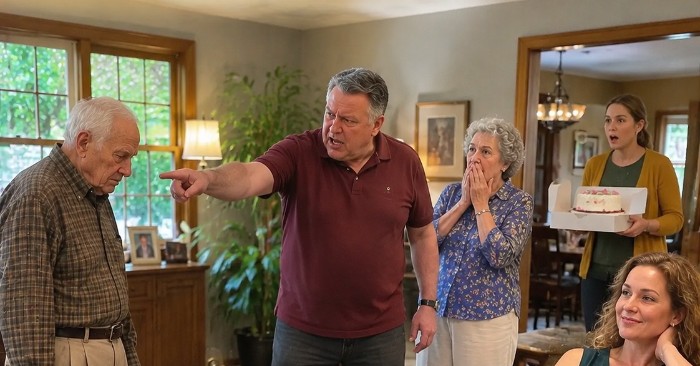
For more than two decades, I put money aside so I could purchase a beautiful seaside property for my aging parents. But just four days after handing them the keys, I arrived for a visit and discovered my brother-in-law relaxing in my father’s favorite armchair, dressed in his new bathrobe. He was proudly telling someone on the phone that he’d found a free summer residence for his entire family.
My father sat quietly in the corner of the living room, looking as though he no longer belonged there.
My mother stood near the kitchen sink, gripping the countertop and trying to hide her distress.
Meanwhile, my younger sister appeared amused as her husband explained that our parents would simply have to accept their new living arrangements.
They believed I would eventually back down, just as I had done on so many previous occasions.
What neither of them realized was that I’d already arranged legal safeguards to prevent anyone from taking advantage of my parents. And when I exposed their secret plans to turn the property into a vacation rental, my sister’s cheerful expression disappeared.
My name is Mara. I’m 37 and work as a nurse practitioner in Providence, Rhode Island.
For eleven years, I’ve worked demanding shifts in cardiac care, often spending long hours looking after patients.
I have a modest condominium, a dependable Subaru, and enough savings to maintain a comfortable lifestyle.
However, my childhood was filled with financial uncertainty.
I grew up in a small apartment with my parents and my younger sister, Dana.
There was never much money available.
My father maintained hospital facilities, while my mother worked part-time in the medical records department.
Both of them worked extremely hard and tried to stretch every paycheck as far as possible.
Unfortunately, even one unexpected expense could throw our household into financial difficulty.
When I was nine, my father’s employer eliminated his position.
He eventually secured another job, but the pay was lower, the benefits were limited, and his back problems were becoming increasingly painful.
Our medical expenses continued to rise.
I remember watching my mother carefully ration her medication because she wanted each prescription to last as long as possible.
She never explained her reasons to me.
There was no need.
Even at that age, I understood that we couldn’t always afford everything our family needed.
My sister, who was two years younger, handled our difficult circumstances differently.
Whenever she wanted something, she would argue, complain, or burst into tears until our tired parents eventually gave in.
I learned to behave in the opposite way.
I became the daughter who rarely requested anything, avoided unnecessary arguments, and tried to make life easier for everyone.
My parents frequently described me as their dependable child.
Back then, I considered it a compliment.
It took me years to recognize that being the responsible one sometimes meant everyone assumed you could manage without support.
When I turned fifteen, an incident occurred that shaped the rest of my life.
One freezing winter evening, I was studying at the kitchen table when my mother opened an unusually expensive heating statement.
She examined the total and didn’t move for several seconds.
Eventually, she placed both hands on the counter and stared into the distance.
She didn’t cry or complain.
Her expression simply reflected complete exhaustion.
After a while, she folded the statement, put it away, and returned to preparing dinner as though nothing had happened.
I never forgot that image.
That night, I made a promise to myself.
Someday, my parents would have a home where they could enjoy warmth, groceries, and necessary medication without constantly calculating every expense.
The next morning, I approached my school counselor and asked what I needed to study if I wanted to pursue nursing.
From then on, I concentrated on building that future.
I worked hard at school, secured financial assistance, took part-time jobs, and eventually earned my nursing qualifications.
Later, I returned to university and completed the additional education required to become a nurse practitioner.
By thirty, I’d cleared my student debt.
At thirty-one, I purchased my own apartment.
Throughout those years, I continued putting money into a separate savings account.
I called it PROMISE.
My parents had absolutely no idea about that account.
I wanted to reveal it only when I’d saved enough to accomplish something meaningful for them.
Unfortunately, while I was quietly working toward my goal, my younger sister was repeatedly getting herself into financial difficulties.
Dana married a man named Marcus.
During their nine years together, Marcus struggled to maintain consistent employment.
He tried working in landscaping, managing a fitness club, operating a contracting business, and occasionally presenting himself as an independent consultant.
Whenever he lost another position, he blamed the people he worked for.
“I won’t stay somewhere that doesn’t appreciate me,” he regularly insisted.
At the same time, Dana developed a habit of contacting me whenever their household needed money.
One evening, following a particularly exhausting fourteen-hour hospital shift, I received a distressed phone call from her.
She told me that they were facing eviction.
Marcus had lost his latest job, and they urgently needed 2,400 dollars to cover their deposit and upcoming rent.
I sent the money immediately.
She assured me that she would reimburse me.
That repayment never happened.
Soon afterward, there were more requests.
She needed assistance with dental expenses, vehicle payments, groceries, childcare, and various unexpected bills.
Whenever another problem appeared, I convinced myself that helping my relatives was simply part of being a family.
However, three years ago, I decided to examine how much financial support I’d provided to Dana and Marcus during the previous nine years.
I created a spreadsheet and entered every payment I could locate.
Once I’d finished calculating the figures, I sat staring at the screen.
47,000 dollars.
I’d transferred an astonishing forty-seven thousand dollars to them.
That amount was far beyond occasional help.
Without realizing it, I’d become their permanent financial backup.
Whenever Marcus encountered another setback, Dana contacted me.
I’d cover the expense.
Then, sooner or later, another crisis would appear.
I’d attempted to put an end to this arrangement twice.
On the first occasion, Dana refused to speak to me for six weeks.
She then involved our mother, who eventually persuaded me to reconsider.
The second time, my sister sent several furious messages before apologizing and requesting assistance again.
The pattern never changed.
Eventually, I realized that continually protecting her from the consequences of her choices wasn’t teaching her independence.
I was simply making it possible for her to avoid responsibility.
When my savings account finally reached the amount I’d been working toward, I made up my mind.
I was going to purchase a house for my parents.
However, I wasn’t going to allow Dana and Marcus to turn my generosity into another opportunity for personal gain.
Before proceeding with the purchase, I arranged a meeting with an estate lawyer named Linda Ferreira.
I explained our complicated family history and described the protections I wanted.
My primary objective was to give my parents a permanent residence where they could enjoy their retirement without worrying about housing costs.
I also wanted to make certain that other relatives couldn’t take advantage of their generosity.
Linda helped me establish an appropriate trust structure.
My parents would be identified as the intended occupants and beneficiaries, with their interests reflected in the property documents, while I would serve as trustee.
The legal arrangement also established clear conditions concerning occupancy.
My mother and father were entitled to reside there.
Other relatives could only visit as guests under the specified conditions.
I finalized the necessary paperwork before telling my parents about the surprise.
Several months later, I discovered a property that immediately felt right.
It was a lovely blue cottage situated along the Maine coastline.
The house featured two bedrooms, a welcoming kitchen, a spacious deck, and beautiful glimpses of the ocean between the trees.
It wasn’t particularly large or luxurious.
Nevertheless, it offered everything my parents needed: comfort, privacy, and tranquility.
After negotiating with the seller, I secured the property for 425,000 dollars.
I paid for it in full.
Then I spent several weekends getting everything ready.
I furnished the rooms, organized the kitchen, arranged the utilities, and paid the property taxes ahead of time.
For my father, I selected a comfortable recliner specifically designed to support his troublesome back.
I filled the refrigerator with foods my parents usually avoided purchasing because they considered them too expensive.
I also made sure his regular medication was available in the medicine cabinet.
Knowing that Dad frequently complained about chilly mornings, I bought him a thick white cotton dressing gown.
As a final touch, I placed a small wooden recipe container inside one of the kitchen drawers.
A handwritten message was tucked inside:
May this home bring you peaceful mornings, unhurried coffee breaks, and the wonderful sound of the ocean. After fifty years of working so hard, you’ve earned the opportunity to rest. Happy anniversary. All my love.
On a Friday morning in October, I picked up my parents and told them we were heading out to celebrate their fiftieth wedding anniversary at a restaurant.
Mom brought homemade sandwiches because she was concerned I might spend too much on lunch.
Dad sat in the passenger seat, quietly watching the countryside pass by.
Eventually, I turned onto the gravel driveway leading to the blue cottage.
My mother looked at the building, clearly confused.
“Are we eating here?” she asked.
I smiled.
“No, Mom. This is the place where you’ll be living.”
Neither of my parents knew what to say.
I explained that I’d purchased the entire property for them.
They wouldn’t have a mortgage.
All the essential services were connected.
The taxes had been paid in advance.
There was plenty of food in the refrigerator, and every room was ready.
My mother brought her hands to her face in disbelief.
My father’s fingers trembled as I placed the front-door key in his hand.
He struggled to position it correctly in the lock.
I gently helped him, just as he had patiently guided me when I was a little girl learning how to handle tools.
Once the door opened, Mom slowly explored the house.
She looked into every room and eventually opened the refrigerator.
The sight of all the groceries brought tears to her eyes.
Then she discovered the wooden recipe box.
After reading my message, she pulled out a chair at the kitchen table and began sobbing.
Dad approached everything differently.
He inspected the walls, examined the electrical system, and tested the doors and windows.
Eventually, he stopped beside the large window overlooking the water.
“This place looks solid. Someone built it properly,” he murmured.
I understood that he was talking about much more than the construction.
That evening, we enjoyed a simple meal on the deck while the sun slowly disappeared over the horizon.
My parents sat close together, holding hands.
Then Dad quietly said something that stayed with me.
“For thirty years, I’ve gone to bed worrying about something. Maybe tonight I’ll finally sleep without that feeling.”
I thought my childhood dream had finally come true.
But within forty-eight hours, an entirely different situation began unfolding.
Mom called and explained that Dana wanted to come over.
“She only wants to have lunch with us,” she said. “She wants to celebrate our new home.”
I wasn’t particularly comfortable with the suggestion.
I knew how easily my sister ignored other people’s boundaries.
Still, I agreed to let them visit briefly.
“That’s fine, Mom. But please make sure they head home before dinner.”
She promised they would.
On Saturday, Dana arrived with Marcus and their two children.
Around lunchtime, I sent Mom a message asking how the visit was going.
She responded with a heart emoji.
However, by late afternoon, she had stopped replying.
When I eventually reached Dad by telephone, his voice sounded unusually hesitant.
“Dana and Marcus decided to stay and have dinner,” he explained.
I asked him to let me know once they had gone home.
He never contacted me.
The next morning, Mom answered my call in a barely audible voice.
“Marcus is still sleeping on the sofa,” she whispered.
“Why hasn’t he gone home?”
“They thought they’d stay for several days. He wants to take the children to see the lighthouse.”
I closed my eyes.
I immediately understood what was happening.
My parents were too polite to demand that their own relatives leave, even though the situation was clearly making them uncomfortable.
I contacted Linda without delay.
She examined the trust documents and explained the legal steps available if guests overstayed or attempted to misuse the property.
I asked her to prepare a formal notice.
I also spoke with a local locksmith and arranged for him to be available in case the locks needed replacing once the visitors departed.
On Wednesday morning, I purchased a chocolate cake and drove toward the coast.
My intention was to visit my parents as their daughter.
But I was also ready to defend their rights if the situation demanded it.
When I arrived, I noticed Marcus’s truck positioned partly over the lawn.
A mattress was tied across the roof.
I immediately sensed that something wasn’t right.
Nobody transports a mattress for an ordinary family lunch.
As soon as I stepped inside, I realized how badly the house had been treated.
Mud covered the entrance.
Empty food packages were scattered around the tables.
Clothing and travel bags occupied the floor.
The new furniture was already dirty.
Even my father’s specially selected recliner was covered with animal hair.
They had brought their dog without bothering to request permission.
But the sight that upset me most was Marcus.
He was standing beside the kitchen counter, wearing the fresh white bathrobe I’d purchased for my father.
He was speaking loudly into his phone.
“Listen, we’ve got an amazing place right on the coast. We’ll be staying here all summer, and it’s not costing us anything!”
When he noticed me, he didn’t look embarrassed.
Instead, he appeared annoyed that I’d interrupted him.
He ended the conversation and gestured toward my father.
“This is a family property. He needs to get used to the arrangement,” he announced.
Dana laughed from her position on the sofa.
I looked toward my parents.
Mom was standing beside the sink, gripping the countertop with both hands.
Her expression brought back the painful memory of watching her struggle over the heating bill when I was fifteen.
Dad was sitting on an ordinary dining chair in the corner.
The expensive recliner I’d purchased specifically for him was being used as though it were common furniture.
He stared down at the floor.
Something inside me suddenly became very calm.
I placed the cake on the kitchen counter.
Then I asked Marcus to take the children outside for a little while.
Once they were gone, I pulled up a chair opposite Dana.
She immediately rolled her eyes.
“Oh, here we go again. You’ve come to start an argument.”
“I came because our mother is afraid to speak freely in her own kitchen,” I answered.
“She doesn’t want to wake anyone. Marcus was sleeping.”
“At nine in the morning?”
My sister avoided looking at me.
I reached into my bag and took out my phone.
“Dana, I’ve discovered the holiday rental advertisement you created.”
Her expression changed instantly.
She became completely motionless.
I turned the screen toward her.
The advertisement featured photographs of my parents’ outdoor deck, their furniture, and the beautiful landscape surrounding the property.
It described the cottage as a coastal holiday retreat available for 325 dollars per night.
Dana had already arranged three separate bookings.
The first reservation was for June.
The second was scheduled for July.
The third was for August.
I looked at her in disbelief.
“Where exactly did you expect Mom and Dad to stay while paying guests occupied their house?”
She struggled to respond.
“Marcus thought we could use the rental income to cover maintenance expenses.”
“The property taxes have already been covered for five years,” I reminded her.
She quickly changed her explanation.
“Well, there are plenty of additional costs involved in owning a house.”
“Then why didn’t you discuss your plans with the actual owners?”
She remained silent.
I continued.
“You intended to move your family into their property, make our parents feel like visitors, advertise the house to strangers, and collect the rental payments yourselves.”
“That’s not what we were doing! You’re deliberately misunderstanding everything!”
“I’m showing you the bookings you already accepted.”
From the kitchen, I heard my mother make a distressed sound.
I kept my attention on Dana.
“Over the years, I’ve given you and Marcus 47,000 dollars.”
Her eyes widened.
“What are you talking about?”
“Forty-seven thousand dollars. I’ve covered your housing expenses, deposits, food, medical bills, car payments, and countless other emergencies.”
She stared at me without speaking.
I continued in a steady voice.
“I haven’t demanded repayment because I wanted to help. But that doesn’t mean I’ll continue financing your decisions.”
She turned toward the window.
“For years, you knew I’d step in whenever something went wrong. You became accustomed to someone else fixing every problem. That’s why you never learned to handle your own responsibilities.”
I then placed two documents in front of her.
The first explained the property’s legal ownership and trust structure.
The second was the official notice prepared by Linda.
Dana read through both pages.
Her expression gradually became angry.
“You had all these legal arrangements ready before you even handed Mom and Dad the keys?”
“Yes.”
“Did you actually expect us to behave like this?”
“I knew what had happened in the past. Protecting our parents was important to me.”
For the first time, my sister seemed to realize that emotional manipulation wasn’t going to change my decision.
I informed her that she and Marcus had to cancel the unauthorized reservations and remove their belongings.
I also explained that I’d already arranged for the exterior locks to be replaced after they left.
Dana suddenly jumped to her feet.
“You really think you’re superior to everybody else!”
“No. I simply learned that planning ahead is better than repeatedly paying to make problems disappear.”
She marched toward the sliding door.
“Marcus! Get the children. We’re going home!”
A few minutes later, Marcus returned looking furious.
However, after examining the paperwork and realizing I wasn’t going to change my mind, he began gathering their belongings.
I walked outside with my parents.
Mom looked heartbroken.
“She’ll probably tell everybody that you threw her family out.”
“That’s her decision,” I replied. “It doesn’t alter what happened.”
Dad remained quiet.
I gently took Mom’s hand.
“You invited them for a meal. They stayed for days, treated your property as though it belonged to them, and attempted to rent it to strangers without your approval. Asking them to leave doesn’t make you unkind.”
Eventually, Marcus came outside carrying several bags.
He turned toward my father.
“It’s unbelievable that you’d treat your own relatives this way.”
Dad didn’t answer.
Marcus continued toward his truck.
Dana followed with the children.
Before climbing into the vehicle, she looked back at me.
“I won’t forget this.”
“I understand,” I answered.
Their son paused near the deck.
“Goodbye, Grandpa,” he said quietly.
Dad struggled to keep his voice steady.
“Goodbye, little one.”
Then the vehicle disappeared down the driveway.
For several minutes, the three of us remained outside without speaking, listening to the waves.
Shortly afterward, the locksmith arrived and replaced the outside locks.
When the work was completed, he handed us the new keys.
I noticed my father’s shoulders relax as the deadbolt clicked into position.
Then I began restoring the house.
I changed the bedding, scrubbed the floors, collected the rubbish, and cleaned the animal hair from Dad’s recliner.
I also washed his white bathrobe and carefully folded it over the chair.
By the time evening arrived, the property looked peaceful again.
Dad put on his robe, settled comfortably into his chair, and began reading a book.
For the first time since Dana had arrived, he looked relaxed in his own living room.
Later that night, we stood together on the deck.
Dad gazed out across the dark water.
“I should have spoken up sooner,” he whispered.
“You stood up for yourself, Dad.”
He slowly shook his head.
“I allowed that man to take my chair, wear my clothes, and behave as if he owned the place. I couldn’t even tell him to stop.”
I rested my hand against his arm.
“You’ve spent your entire life helping other people. Needing someone to stand beside you doesn’t mean you’ve failed.”
His eyes began to fill with tears.
“I felt ashamed.”
“You haven’t done anything wrong.”
He looked toward the house.
“Was Dana really planning to let strangers stay here?”
“Three confirmed bookings. Almost the entire summer.”
He remained quiet for a while.
Eventually, he placed his hand on my shoulder.
“I’m grateful you came.”
He didn’t add anything else.
But I knew exactly what he was trying to tell me.
The following morning, my phone was overflowing with messages.
Dana had shared photographs of her children sitting inside their vehicle, claiming I’d forced them to spend the night in a parking area.
She accused me of valuing financial arrangements more than family relationships.
Other relatives soon became involved.
My aunt demanded that I explain myself.
Dana described me as cruel and selfish.
Marcus’s mother also sent several furious messages.
For a moment, I considered sharing the rental advertisement publicly.
I had enough evidence to demonstrate exactly what had happened.
But I decided against it.
My parents were finally enjoying breakfast in a peaceful kitchen.
I wasn’t going to turn their new home into the subject of a public family dispute.
When my aunt eventually called, I gave her one short response.
“If you really want to understand the situation, ask Mom what it felt like to become a visitor in her own house.”
Then I ended the call.
As the following weeks passed, the angry messages gradually became less frequent.
My parents began settling into their new surroundings.
Mom started baking again.
Dad developed a habit of walking toward the water every morning.
He even began experimenting with different soup recipes.
During one of my visits, I noticed he’d moved the outdoor chairs to create a more beautiful view of the ocean.
My mother seemed genuinely happier than she’d been in years.
One afternoon, she mentioned that Dana had contacted her.
“She says she’s sorry that everything turned out so badly.”
I waited for her to continue.
Then Mom surprised me with another observation.
“But she hasn’t actually apologized for what she did, has she?”
I smiled.
“No, Mom. Not really.”
She admitted that she missed having my sister around but remained concerned that the same problems might happen again.
I suggested establishing some reasonable conditions before arranging another visit.
Dana could come for lunch one afternoon.
She would visit without Marcus.
And she would respect the agreed departure time.
My mother thought about it before finally agreeing.
Several months later, Dana arrived for lunch.
Dad prepared his favorite butternut squash soup.
Mom baked her homemade honey cake.
They spent the afternoon talking about everything that had happened.
There were emotional conversations, uncomfortable pauses, and moments when nobody knew what to say.
Nevertheless, Dana left before dinner, as she had promised.
That evening, Mom called me.
“She mentioned that Marcus has found work on the night shift at a warehouse. She’s also working at a picture-framing business again.”
“That’s a positive development,” I replied.
“They’ve moved into a small apartment. It’s nothing luxurious, but they’re covering the expenses themselves.”
I listened without interrupting.
Then Mom added something else.
“Before Dana left, she looked around the kitchen and told us how happy she was that you bought us this house.”
My throat tightened.
Later that evening, a message arrived from Dana.
I think I’m finally beginning to understand what this home means to Mom and Dad. Mom made her honey cake, and Dad prepared his soup. I don’t know how to explain everything I’m feeling, but I’d like to make an effort to put things right.
I read the message several times.
Then I responded:
Whenever you’re ready, I’ll listen.
Almost twelve months have passed since the incident.
Dana and I now communicate occasionally.
Our relationship hasn’t completely recovered.
Some discussions are pleasant.
Others still feel uncomfortable.
But something important has changed.
She hasn’t requested financial assistance from me again.
Marcus hasn’t attempted to return to my parents’ property.
The children occasionally send pictures of lighthouses and crabs, which Dad proudly displays on the refrigerator.
Most importantly, my parents are enjoying the peaceful retirement they always deserved.
Last month, they celebrated their fifty-first wedding anniversary.
I traveled to Maine to spend the weekend with them.
Mom had prepared her traditional honey cake.
Dad had cooked his favorite soup.
While helping them in the kitchen, I opened the little wooden recipe box I’d placed there when I first bought the house.
My original anniversary message was still inside.
However, it was now surrounded by several handwritten recipes.
Apple pie.
Honey cake.
Vegetable soup.
And one more recipe in my father’s distinctive handwriting.
Butternut Squash Soup — Improved Recipe.
At the bottom, he’d included a little instruction:
Add a small pinch of cayenne pepper. Keep this secret from Mara.
I laughed out loud.
Then I carefully returned the recipe to the box.
That evening, I stood beside the kitchen window and listened to the distant ocean.
Dad had already retired for the night.
Mom mentioned that he’d been sleeping much better since moving into the new house.
For most of my life, I’d believed that fulfilling my childhood promise meant taking responsibility for every difficulty my family encountered.
Eventually, however, I learned a valuable lesson.
I couldn’t reverse all the hardships my parents had experienced.
I couldn’t make my father’s back problems disappear.
And I couldn’t make Dana responsible by constantly protecting her from the results of her own decisions.
Some difficulties can be addressed through financial support and careful preparation.
Others require clear boundaries, patience, and allowing people to face their own responsibilities.
The 425,000-dollar seaside property was never intended to be an extravagant purchase or a demonstration of my financial success.
It represented something my parents had gone without for most of their lives.
Peace.
A kitchen where Mom could prepare her favorite recipes without worrying about unpaid bills.
A supportive armchair where Dad could enjoy his books without unnecessary discomfort.
A medicine cabinet containing everything he needed.
A quiet outdoor deck overlooking the ocean.
And a front entrance they could lock without feeling guilty about keeping unwanted visitors away.
That night, I turned off the kitchen lights and checked the front door before heading upstairs.
For the first time, I no longer felt that I had to solve everybody’s problems.
I’d finally honored the promise I made to myself when I was fifteen.
My parents now had a secure, comfortable home where they could enjoy their remaining years without living in constant fear of another financial crisis.
And that was everything I’d ever wanted.