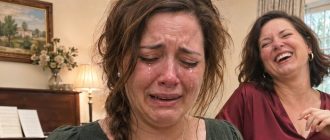
“My mother only celebrates her sixty-fifth birthday once! If you’re really suffering that much, call an ambulance!”
Those were the words my husband shouted while I lay on our living room floor, thirty-nine weeks pregnant, bleeding heavily, and struggling through contractions that felt as though they were tearing me apart.
My husband’s name was Derek Whitmore.
And that evening, I discovered just how little my life—and the life of our unborn child—mattered to him.
“Derek, please come home!” I begged into the phone. “My water has broken! There’s so much blood, and I can’t feel our baby moving!”
I could barely catch my breath between contractions.
But instead of concern, I heard loud music, laughter, and the clinking of champagne glasses.
Derek was attending an extravagant birthday celebration for his mother, Patricia, in Seattle’s Queen Anne neighborhood.
Then I heard her voice in the background.
“Derek, sweetheart, is Olivia causing another problem? Honestly, that woman always manages to spoil every important family celebration!”
My husband let out an annoyed sigh.
“Olivia, stop exaggerating! I don’t have time for another one of your dramas. Call a cab or an ambulance and get yourself to Harborview. I’ll come by after we’ve had dessert.”
“Derek, please don’t hang up—”
The call disconnected.
I stared at my phone.
My name is Olivia Bennett Whitmore.
For seven years, I’d convinced myself that my marriage, despite its problems, was based on genuine affection.
But as another agonizing contraction swept through my body, I finally understood the truth.
My husband would rather enjoy his mother’s party than help his wife and unborn son survive a medical emergency.
The pain intensified.
I tried to get to my feet, but my legs gave way beneath me.
Instead, I began dragging myself across the wooden floor toward the front door.
Every movement was excruciating.
When I reached the small table in the hallway, I grabbed its edge to steady myself.
My shaking hand knocked over a stack of mail.
Envelopes scattered across the floor.
One immediately stood out.
It was a thick, cream-colored envelope addressed to me.
The return address belonged to an established Seattle law firm, printed in elegant gold letters.
Why would a prominent legal firm be writing to me?
Before I could investigate, another contraction struck.
I dropped the envelope and concentrated on reaching the entrance.
Using what little strength I had left, I unlocked the front door and called 911.
“Please send someone,” I whispered. “I’m pregnant, I’m bleeding, and I think something is terribly wrong with my baby.”
The dispatcher immediately arranged for an ambulance.
“Help is on the way, Olivia. Stay with me. Keep talking and try not to close your eyes.”
I remained on the cold floor, struggling to stay conscious.
Then headlights swept across the rain-covered windows.
A vehicle stopped outside.
I heard hurried footsteps on the porch.
Seconds later, the front door opened.
“OLIVIA! ARE YOU OLIVIA BENNETT WHITMORE?”
An older man wearing an expensive dark overcoat rushed into the house.
Rain dripped from his hair and shoulders.
As he stepped into the hallway light, I recognized him.
Charles Harrington.
The billionaire chairman of one of Seattle’s largest financial corporations.
The man whose company had employed Derek for seven years.
My husband admired Charles almost obsessively and had spent years trying to climb the corporate ladder beneath him.
But Charles wasn’t looking at me like an executive visiting an employee’s home.
His face showed genuine terror, disbelief, and overwhelming emotion.
He knelt beside me.
Then I noticed something extraordinary.
His pale gray eyes looked almost exactly like mine.
Even the shape of his eyebrows seemed familiar.
He gently took my hand.
His voice trembled.
“Don’t try to move, sweetheart. I’m here now. You won’t have to go through this alone.”
I stared at him in confusion.
Why was one of Seattle’s wealthiest businessmen speaking to me with such tenderness?
And why did he look like someone who had finally recovered something precious he’d lost decades earlier?
I didn’t understand it yet.
But the man kneeling beside me was carrying a secret that had remained hidden for thirty-two years.
“Mr. Harrington… why did you come to my house?”
I could barely form the words as the ambulance sped toward Harborview Medical Center.
An intravenous line had been placed in my arm, and medication was flowing into my bloodstream.
Every few minutes, another contraction forced a cry from my throat.
Charles sat beside me, holding my hand.
He removed a spotless handkerchief from his coat and carefully wiped the sweat from my forehead.
This was a businessman whose decisions affected thousands of employees.
Yet his hands were shaking.
“My investigator confirmed your identity just two hours ago,” he explained. “Olivia, I’ve been trying to find you.”
I stared at him.
“Find me?”
He nodded.
“I had no idea you were married to Derek Whitmore. My lawyers sent you two certified letters over the past six weeks, but we never heard back.”
My heart tightened.
I suddenly remembered an expensive-looking envelope that had arrived several weeks earlier.
It had already been opened.
When I questioned Derek about it, he claimed it was unimportant business correspondence and threw it away.
“Derek received one of those letters,” I whispered. “I remember seeing his signature on the delivery confirmation.”
Charles’s expression hardened.
Neither of us spoke for several seconds.
A horrifying possibility was beginning to form in my mind.
My husband hadn’t simply abandoned me during a medical emergency.
He might also have intentionally prevented me from discovering the truth about my own family.
Before Charles could explain anything else, the ambulance reached Harborview.
The rear doors swung open.
Medical personnel rushed toward us.
“Obstetric emergency!” one paramedic shouted. “Suspected placental abruption! Severe fetal distress!”
They transferred me onto a hospital stretcher and hurried me toward surgery.
An obstetrician leaned over me.
“Olivia, your baby is showing signs of serious distress. We need to perform an emergency cesarean delivery immediately.”
Tears streamed down my cheeks.
“Please save him. I’ll do anything. Just don’t let my baby die.”
A nurse asked whether my husband was coming.
I shook my head.
“No. He’s not.”
Then Charles stepped forward.
“I’m her father,” he said.
For an instant, everything seemed to stop.
He continued, his voice breaking.
“Please do everything medically possible for my daughter and grandson.”
I wanted to ask him a thousand questions.
Why hadn’t I known about him?
Where had he been throughout my thirty-two years of life?
How could the billionaire who employed my husband be my biological father?
But the surgical team was already preparing to operate.
An oxygen mask covered my face.
The voices around me became distant.
Suddenly, a sharp alarm sounded.
The medical team could no longer detect my son’s heartbeat on the fetal monitor.
Someone shouted for immediate action.
As darkness began closing around me, I heard a doctor yell:
“We need to deliver this baby immediately!”
Then I lost consciousness.
When I finally opened my eyes, the first thing I noticed was the rhythmic beeping of a hospital monitor.
My entire body felt heavy.
A deep ache spread through my abdomen when I attempted to move.
Instinctively, I reached for my stomach.
It was no longer round.
Panic seized me.
“My baby!” I cried. “Where’s my son?”
Charles hurried to my bedside.
His eyes were red, and exhaustion was written across his face.
“Olivia, listen to me. Your little boy is alive.”
I burst into tears.
He explained that the doctors had managed to deliver and stabilize my son.
However, the baby had been transferred to the neonatal intensive care unit because he required respiratory assistance and careful monitoring.
“Can I see him?” I whispered.
“As soon as the medical team says it’s safe.”
Charles sat beside me and took my hand.
“I’m sorry I didn’t find you sooner,” he said. “But I promise I’m not going to vanish from your life again.”
Several hours later, a nurse wheeled me into the NICU.
My newborn son lay inside an incubator.
Tiny tubes and monitoring wires surrounded his fragile body.
I rested my palm against the clear wall.
“Mommy’s here, darling,” I whispered. “I’m staying right here.”
Then footsteps sounded behind me.
I turned.
Derek stood in the doorway.
He wore a perfectly pressed suit, his hair was neatly styled, and his face displayed an expression of carefully rehearsed concern.
“Olivia! Thank goodness you’re okay! I’ve been worried out of my mind!”
I stared at him.
The man who had dismissed my desperate cries for help was now pretending he’d spent the entire night fearing for my safety.
Before I could respond, Charles approached.
“That’s a remarkable statement, Mr. Whitmore,” he said coldly. “Especially considering we know precisely where you were while my daughter was undergoing emergency surgery.”
Derek went pale.
“Mr. Harrington? Why are you here?”
Charles didn’t answer immediately.
Instead, he brought up the certified letters Derek had received and hidden.
My husband’s expression changed.
“I was just trying to spare Olivia unnecessary stress during her pregnancy,” he protested.
Anger rose through my exhaustion.
“You left me alone on the floor while I was bleeding, Derek. And now you’re admitting that you deliberately concealed information about my father?”
Derek opened his mouth.
But he had no convincing explanation.
At Charles’s request, hospital security escorted him away from the neonatal unit.
Later that afternoon, my newly discovered father returned with his attorney.
She carried a thick folder filled with documents.
“Olivia,” Charles began, “the letters my lawyers sent weren’t only about our relationship.”
He hesitated.
“They also explained a trust I’d created for you.”
The attorney opened the folder.
“Unfortunately, someone recently submitted paperwork requesting control over assets connected to that trust.”
I frowned.
“Who would do that?”
Charles placed a document in front of me.
The applicant was Derek Whitmore.
My husband.
But the attached authorization was even more disturbing.
It displayed my name.
And beneath it was a signature that looked almost exactly like mine.
According to the paperwork, I’d voluntarily granted Derek authority to manage my inheritance rights.
I examined the date.
The document claimed I’d signed it that very morning.
While I was unconscious during surgery.
While doctors were desperately trying to save my baby’s life.
And suddenly, I realized that my husband’s betrayal had been far more deliberate than I’d ever imagined.
“That can’t be right,” I whispered. “I was unconscious. I couldn’t possibly have signed anything.”
The attorney, Ms. Mensah, nodded.
“Exactly. And that makes this document extremely significant.”
She pointed to the notarization details.
The paperwork claimed my signature had been witnessed at 9:42 that morning at a UPS Store on Fifth Avenue.
But the hospital records showed I’d been under anesthesia from approximately 9:05 a.m. until almost noon.
The contradiction was undeniable.
Someone had signed my name while I was physically incapable of doing so.
I studied the signature.
The rounded letters.
The unusual downward stroke.
Even the long line extending beneath my surname.
It was a carefully executed imitation.
“Derek has watched me sign documents hundreds of times,” I whispered. “He could easily have shown somebody how to copy my handwriting.”
Charles’s expression darkened.
“He may have assumed you wouldn’t survive the operation,” he said quietly. “Or perhaps he thought you’d be too overwhelmed afterward to question the paperwork.”
A terrible sense of clarity settled over me.
I turned toward him.
“Tell me everything. Starting with why you came looking for me.”
Charles moved his chair closer.
Then, with trembling hands, he began telling me about a woman named Rebecca Bennett.
Thirty-three years earlier, he’d been a twenty-nine-year-old entrepreneur struggling to establish his first company in a tiny rented office.
Rebecca was a high school English teacher.
She adored literature and poetry.
She loved teasing Charles about his ambitious plans for the future.
And he had fallen completely in love with her.
When Rebecca became pregnant, Charles wanted to marry her immediately.
But his father strongly opposed their relationship.
He believed a schoolteacher was an unsuitable match for his son.
He also threatened to withdraw the financial support Charles needed to expand his company.
So Charles’s father decided to separate them.
He gave Rebecca a forged letter claiming Charles had chosen his career instead of her.
Then he told Charles that Rebecca had accepted money and disappeared.
Each believed the other had abandoned the relationship.
Rebecca moved to Spokane.
There, she gave birth to a daughter.
Me.
Eleven months later, she died suddenly from an aneurysm.
Her sister, Helen Bennett, adopted me and raised me.
I struggled to breathe.
“Aunt Helen…” I whispered.
Helen was the only mother I’d ever known.
She’d passed away when I was twenty-two.
Throughout my childhood, she’d told me that my biological father had disappeared before I was born.
“She believed that version of events too,” Charles explained. “My father’s attorneys made certain she never learned the truth.”
He continued his story.
His father had died earlier that spring.
While reviewing the deceased man’s private documents, an attorney discovered letters Rebecca had repeatedly sent to Charles.
None had ever reached him.
His father had intercepted them.
Some remained unopened.
Others had been returned to Rebecca.
As soon as Charles learned the truth, he began searching for her child.
But tracking down old adoption records proved difficult.
My birth name led investigators nowhere until they uncovered my marriage certificate.
Olivia Bennett.
Married to Derek Whitmore.
An employee of Charles’s own company.
“When we finally established who you were, I sent two letters,” Charles explained.
“The first introduced me. The second contained legal information about the trust I’d established in your name.”
He lowered his eyes.
“I wanted you to know the truth, even if you decided you never wanted a relationship with me.”
“And Derek received both letters?”
“Yes.”
My chest tightened.
“Then why would he hide them?”
Ms. Mensah answered.
“Because your husband may have known about your family history long before those letters arrived.”
She explained that investigators had examined company email records through authorized procedures.
Six months before our wedding, Derek had searched historical information concerning my biological relatives.
He’d discovered an old adoption notice in a Spokane newspaper archive suggesting a possible connection between my family and the Harrington name.
He couldn’t confirm whether the connection was genuine.
But apparently, he’d remembered it.
Then Charles’s letter arrived.
And the uncertainty vanished.
“Are you telling me Derek married me because he suspected I might inherit a fortune?” I asked.
Ms. Mensah answered carefully.
“We can’t establish every reason he chose to marry you. But the evidence indicates that once he learned about the trust, he deliberately attempted to obtain control over it.”
I stared at the documents.
Seven years.
Seven years of believing my husband genuinely cared about me.
And now I was discovering that he’d concealed information about my father while trying to gain authority over assets that belonged to me.
The betrayal was almost impossible to comprehend.
But that evening, something happened that reminded me what mattered more than anything else.
A nurse took me back to the neonatal intensive care unit.
Dr. Alvarez, the neonatologist responsible for my son’s care, greeted me with a reassuring smile.
“His oxygen levels are improving,” she explained. “He’s making encouraging progress.”
“Could I hold him?”
She smiled.
“For a little while. Skin-to-skin contact would be very beneficial.”
A nurse carefully placed my tiny son against my chest.
His little face was pink and wrinkled.
His fingers curled instinctively.
He felt impossibly small against me.
I began to cry.
But this time, the tears weren’t caused by fear.
They were tears of gratitude.
My son had survived.
Charles stood awkwardly near the doorway.
I looked toward him.
“Come closer.”
He approached slowly.
After the nurse helped him put on the required protective clothing, I carefully transferred my baby into his arms.
Charles stared down at his grandson.
Then a strange sound escaped him.
Part laughter.
Part sobbing.
“He has your chin,” he whispered.
I smiled through my tears.
“And your eyes.”
Charles’s expression crumpled.
“Olivia…” he began.
He stopped, struggling to speak.
Then he tried again.
“My daughter. Would you mind if I called you that?”
I smiled.
“You already did. When you found me on the floor.”
He laughed softly.
For one precious moment, I experienced something I hadn’t felt in a very long time.
A genuine sense of belonging.
A real family.
But the following morning, Derek returned to the hospital.
And this time, two police detectives were waiting for him.
According to Ms. Mensah, Derek arrived looking unusually confident.
He stepped out of the elevator in another expensive suit, apparently prepared to deliver a carefully practiced explanation.
But before he could reach the maternity ward, two Seattle detectives approached him.
At first, he acted confused.
Then he attempted to justify himself.
By the third question, he demanded to speak with an attorney.
Investigators had already collected several important pieces of evidence.
The notary’s official records.
Security footage from the UPS Store.
The hospital’s detailed anesthesia timeline.
And financial documents connecting Derek to the forged authorization.
Then came another devastating discovery.
The woman who had impersonated me was named Lauren Pierce.
She was Derek’s mistress.
Investigators alleged that she’d practiced copying my signature while attending the same birthday celebration Derek had refused to leave.
While I was bleeding on our living room floor, my husband had been involved in preparing documents intended to give him control over my inheritance.
When I learned the truth, I felt physically ill.
Both Derek and Lauren faced criminal charges connected to the forged documents and attempted financial fraud.
Derek’s attorney later claimed his client had only been trying to safeguard family assets.
But prosecutors challenged that explanation.
The woman whose property he wanted to control had been unconscious during emergency surgery when the supposed authorization was signed.
Charles refused to interfere with the legal investigation.
He had no reason to.
Within forty-eight hours, the board of his corporation removed Derek from his position, citing the criminal investigation and violations of company ethics standards.
His anticipated severance benefits disappeared.
And the professional future he’d spent years building began to collapse.
Then his mother started calling me.
Patricia’s first voicemail was filled with anger.
She accused me of humiliating their family and destroying her son’s career.
Three weeks later, she left another message.
This time, her voice sounded different.
There was a long pause before she spoke.
“I didn’t know about those documents, Olivia. I’m sorry for what I said that night.”
I listened to the recording.
Then I put my phone away.
I wasn’t ready to respond.
And for the first time, I didn’t feel obligated to make someone else comfortable at my own expense.
The divorce moved forward without a prolonged dispute.
I kept our house temporarily, then arranged to sell it.
The court awarded me full custody of our son, with Derek’s visitation supervised while the criminal case continued.
Nineteen days after his birth, my little boy was finally released from the hospital.
I named him Noah.
Not to honor a wealthy family member.
Not because I wanted anyone’s approval.
Simply because the name felt right.
His middle name was Bennett, in memory of my mother, Rebecca.
Noah Bennett Whitmore.
Charles had already arranged a beautiful nursery in his home overlooking Lake Washington.
The room was bright and peaceful, with large windows overlooking the water.
He insisted on assembling the crib himself.
It took him four hours.
At one point, he called his assistant for help.
Apparently, the billionaire who negotiated enormous financial deals had been studying the crib instructions upside down.
When I heard what happened, I laughed harder than I had in weeks.
That first evening, I found Charles sitting in the nursery’s rocking chair.
Noah was sleeping against his shoulder.
On the dresser stood a framed photograph of a young woman with dark hair and a wonderfully crooked smile.
She was standing outside a bookstore.
“That’s Rebecca,” I whispered.
Charles nodded.
“She would have been incredibly proud of you.”
I moved closer to the photograph.
“I look so much like her.”
“You do,” he replied. “And you inherited her determination.”
He glanced down at Noah.
“You were in terrible pain, losing blood, and fighting to remain conscious. Yet you dragged yourself across that floor to unlock the door and call for help. That took extraordinary courage.”
I sat beside him.
For a while, we watched Noah sleep.
Then I admitted something I’d been carrying inside.
“I’m still angry.”
Charles turned toward me.
“At my grandfather. At all the years we lost. At Derek for making me believe I wasn’t worth anything.”
He nodded.
“You have every reason to feel angry.”
I swallowed.
“But I’m not angry with you.”
Charles closed his eyes.
When he opened them again, tears filled them.
“Thank you,” he whispered. “But you don’t owe me forgiveness.”
“I know,” I replied. “That’s why I want you to understand that I truly mean it.”
For the first time since everything had happened, I began to believe that the shattered pieces of my life might eventually become something beautiful.
Six months later, the criminal proceedings reached their conclusion.
Derek accepted a plea agreement.
He received a four-year prison sentence for offenses involving forgery and fraud.
Lauren received an eighteen-month sentence, followed by probation.
I sat beside Charles in the courtroom as the judge announced the sentences.
I’d imagined that moment countless times.
I expected to feel victorious.
Vindicated.
Maybe even satisfied.
But when the judge finished speaking, I experienced something far quieter.
Relief.
I was exhausted by everything that had happened.
Tired of attorneys, legal documents, medical reports, and painful memories.
All I wanted was to return home to my son.
As we walked out of the courthouse, a reporter called out a question about Charles Harrington’s previously unknown daughter.
Charles stopped.
He turned toward the cameras.
“My daughter isn’t a secret,” he said firmly.
Then he looked at me.
“She’s the greatest blessing life has ever given back to me. And I intend to spend whatever years I have left making up for the time we were denied.”
Tears filled my eyes.
I laughed softly, wiped my cheeks, and continued down the courthouse steps with Noah sleeping peacefully in my arms.
That evening, the three of us sat together on the back porch of Charles’s house.
Across Lake Washington, lights began appearing in distant homes as the evening sky darkened.
Noah stirred in my arms.
Then he reached toward Charles’s glasses.
My father pulled them away with exaggerated seriousness.
“Those belong to me, young man.”
I laughed.
“Not for much longer.”
Charles grinned.
And for the first time since meeting him, I caught a glimpse of the man he might have been before decades of responsibility and regret had changed him.
He looked genuinely happy.
I thought back to the night Noah was born.
The terrible pain.
The rain beating against the windows.
The husband who ended my desperate phone call because he didn’t want to miss dessert.
The cream-colored envelope lying among the scattered mail.
And the stranger who arrived at my door when I believed nobody was coming.
For thirty-two years, I’d lived without knowing my biological father.
I’d grown up believing he’d abandoned my mother.
And after Helen died, I’d convinced myself that the family I was building with Derek was all I needed.
But that terrible night changed everything.
The man I’d married had chosen to abandon me at the moment I needed him most.
Meanwhile, a father I’d never known had been desperately searching for the daughter he’d been prevented from knowing.
When Charles finally reached my house, he didn’t hesitate.
He stepped inside.
Knelt beside me on the floor.
Held my hand.
And promised that I would never have to face the world alone again.
At the time, I could barely understand his words.
Now, watching him laugh with my son, I finally understood.
Family isn’t always defined by the people who share your last name.
It isn’t necessarily the person you marry.
And sometimes, it isn’t even the people who’ve been part of your life for years.
Sometimes family is the person who appears when everything is falling apart.
The person who doesn’t search for excuses.
Who doesn’t demand anything in exchange for helping you.
Who simply reaches for your hand during the darkest moment of your life and says:
“I’m here. You don’t have to face this alone.”
My father made that promise on a rainy night when my son and I were fighting for our lives.
And unlike the promises Derek had made throughout our marriage, Charles kept his.
Because this time, someone truly stayed.