For six years, my grandfather quietly listened as his own children discussed how they would divide his wealth after his death.
They assumed he couldn’t hear them.
They described him as a helpless old man.
They estimated the value of his farmland.
They even talked openly about selling the property while he sat only a few feet away.
Not one of them suspected he understood every word.
Then, during Christmas dinner, my aunt laughed and said, “Once the old man is gone, we’ll finally have enough money to live comfortably.”
Grandpa slowly placed his fork on the table.
He looked directly at her.
“Margaret, I’ve heard everything you’ve said since 2020.”
All twenty-two relatives fell silent.
Grandpa reached behind his ear and showed them a tiny hearing aid nobody knew he owned.
Then he removed a battered blue notebook from his cardigan pocket.
“Six years,” he said calmly. “I’ve been keeping a record of everything.”
My aunt turned pale.
But the greatest surprise came when Grandpa asked me to invite his attorney inside.
Because he’d already decided what would happen to the family’s multimillion-dollar farm.
And the documents inside that attorney’s briefcase were about to change our lives forever.
My name is Emily Warren. I’m twenty-six years old, and I spent my childhood on my grandparents’ farm near Beatrice, Nebraska.
My mother, Caroline, died in a car accident when I was eleven. My father wasn’t involved in my life, so my grandparents, Walter and Rose Warren, took me in and raised me as their daughter.
Grandpa had spent more than five decades cultivating 640 acres of corn and soybeans.
He could repair almost any piece of equipment.
His most treasured possession was an aging John Deere tractor that his father had purchased in 1966.
In October 2019, an accident involving that tractor changed everything.
I was twenty and visiting home from college when a deafening crash came from the machinery shed.
Grandma and I rushed outside.
We found Grandpa sitting beside the tractor, looking dazed and confused.
He hadn’t suffered any major physical injuries, but he couldn’t understand what we were saying.
At the hospital, doctors explained that an extremely loud mechanical failure had caused serious damage to his hearing.
Grandpa was seventy-seven.
For someone who’d spent his entire life surrounded by the sounds of engines, tractors, birds, and open fields, losing his hearing was devastating.
During the months that followed, he became increasingly withdrawn.
At family dinners, relatives grew irritated whenever he asked them to repeat themselves.
Eventually, some stopped trying to include him in conversations at all.
Then, in February 2020, I drove Grandpa and Grandma to a hearing specialist in Omaha.
The specialist fitted him with discreet hearing aids that were nearly impossible to see beneath his silver hair.
When the devices were activated, Grandpa became completely still.
Grandma leaned toward him.
“Walter? Can you hear me?”
His eyes filled with tears.
“Rose,” he whispered, “I can hear you breathing.”
Grandma began to cry.
So did I.
After months of struggling in silence, Grandpa could finally hear us clearly again.
But on our way home, he made a strange request.
“Emily, I want you to promise me something.”
“Of course, Grandpa.”
“Don’t tell the rest of the family about my hearing aids.”
I glanced at him in the rearview mirror.
“Why would you want to keep that a secret?”
He smiled slightly.
“Because people show you their true character when they believe you can’t hear what they’re saying.”
Grandma shook her head.
“Walter, that sounds rather sneaky.”
He chuckled.
“I’ve spent seventy-seven years doing plenty of talking. Maybe it’s time I listened for a while.”
I agreed to keep his secret.
I couldn’t have imagined how important that promise would become.
Grandpa had three children.
My mother, Caroline, had died years earlier.
His eldest daughter, Margaret, lived in Lincoln with her husband, Richard.
They enjoyed luxurious vacations, owned a boat, and loved discussing investments and expensive purchases.
Their thirty-year-old son, Brandon, struggled with debt.
Their seventeen-year-old daughter, Sophie, was a quiet girl who loved drawing.
Grandpa’s son, Michael, lived on the farm with his wife, Diane.
Michael worked alongside Grandpa every day.
He got up before sunrise, maintained the machinery, and helped manage the fields without expecting praise or special treatment.
Whenever the family gathered, Grandpa sat in his usual chair at the head of the table.
He pretended he still had trouble following conversations.
“Sorry, what was that?”
“Could you speak a little louder?”
“Would you mind repeating that?”
After a while, Margaret and Richard stopped making the effort.
They began discussing his belongings and property as though he weren’t sitting there.
During Thanksgiving dinner in 2020, Margaret leaned toward her husband.
“The farmland alone must be worth at least five million dollars.”
Richard nodded.
“Probably even more if you include the equipment.”
Grandpa calmly continued spreading butter on his bread.
He’d heard every word.
The following Christmas, Richard began researching the resale prices of agricultural machinery.
He searched online listings and announced the figures aloud while Grandpa sat nearby.
Margaret laughed and encouraged him.
But the most hurtful comment came at Easter dinner in 2022.
Brandon was complaining about having to visit the farm.
“Why do we keep wasting our weekends coming out here?” he asked.
Then he glanced at Grandpa.
“He barely understands what’s going on anymore. We should put him somewhere comfortable and split up the property.”
Anger rushed through me.
I started pushing my chair away from the table.
But Grandpa caught my eye.
He gave me the slightest shake of his head.
Then he smiled pleasantly at Brandon.
“Would you pass me the bread rolls?”
Brandon rolled his eyes and shoved the basket toward him.
Later that evening, I found Grandpa alone in the machinery shed.
“How can you sit there and let them say such horrible things?” I demanded.
He put down the wrench he’d been holding.
“I’m learning something important, Emily.”
“What could possibly be worth listening to all that cruelty?”
He gazed toward the fields.
“I’m discovering who people become when they believe nobody is paying attention.”
That night, I learned Grandpa had been recording what he heard.
He kept a small blue notebook in his bedroom.
Its pages contained dates, names, and descriptions of conversations.
Some entries consisted of only a few words.
Others covered entire pages.
But he wasn’t simply collecting evidence of unkind remarks.
He was writing down acts of kindness, too.
One cold winter morning, Grandpa overheard Michael speaking with the farm veterinarian.
“Dad’s getting older,” Michael admitted.
“But this place is his whole life. As long as he wants to keep working, I’ll always find something useful for him to do.”
Grandpa recorded those words in his notebook.
On another afternoon, Sophie sat beside him on the porch.
Believing he couldn’t hear her clearly, she began talking about difficulties she was experiencing at school.
She explained that drawing helped her manage her worries.
Her parents wanted her to study business.
But she dreamed of becoming a professional artist.
“I wish I could stay here forever,” she whispered. “Nobody makes me feel like I have to become someone else.”
Grandpa continued rocking gently in his chair.
He didn’t reveal that he’d heard her.
But later, he wrote down every word he could remember.
And then there was Grandma.
For fifty-four years, she’d been his closest friend and companion.
He loved listening to her hum while preparing meals.
He loved hearing her talk affectionately to the cats around the barn.
And nothing made him happier than the sound of her laughter.
Sadly, Grandma became seriously ill in 2024.
Over the following months, her condition steadily worsened.
Grandpa rarely left her side.
I helped whenever possible, while Michael and Diane took on more responsibility for the farm.
Grandma passed away the following April.
Without her, the farmhouse felt painfully empty.
At the funeral, Margaret delivered a beautiful speech about her mother’s kindness and the wonderful childhood she’d given her.
Nearly everyone cried.
But afterward, I overheard Margaret speaking to Richard near the refreshments at the church.
“Well,” she remarked casually, “at least now there’s only one parent left.”
Grandpa was sitting close enough to hear her.
And he did.
For the first time since the hearing aids had been fitted, I saw an expression on his face that truly frightened me.
He looked completely heartbroken.
That evening, he spent several hours alone with his blue notebook.
Eight months later, Grandpa announced that he wanted everyone to gather at the farmhouse for Christmas.
“Your grandmother would have wanted us together,” he explained.
Twenty-two relatives accepted the invitation.
The farmhouse filled with the smells of roasted ham, cinnamon, and freshly baked bread.
I’d spent Christmas Eve preparing Grandma’s favorite apple and cherry pies.
They weren’t as beautiful as the ones she used to make, but Grandpa smiled when he saw them.
“Rose would have been very proud of you, Emily.”
Then he went upstairs to make a telephone call.
When he returned, he asked me to set an additional place at the table.
“Who’s coming?” I asked.
“An old friend.”
He smiled mysteriously.
“He’ll wait outside until I ask for him.”
I thought it was unusual, but I didn’t question him.
Christmas dinner began at two in the afternoon.
Grandpa sat at the head of the table in his favorite brown cardigan.
Michael offered a prayer.
Then everyone began eating.
For a little while, the gathering felt like the happy family celebrations I remembered from childhood.
Then Margaret poured herself another glass of wine.
She leaned toward Richard.
“I spoke with a commercial real estate agent last week.”
Richard immediately looked interested.
“About the farm?”
She nodded.
“He thinks the southern fields alone could sell for 1.5 million dollars if a developer gets involved.”
I stopped eating.
Grandpa continued cutting his ham.
Richard glanced toward him.
“He’s getting pretty old. I doubt we’ll have to wait much longer.”
Margaret nodded as though they were discussing the weather.
Then she laughed.
“When Dad finally passes, selling the land could pay off our mortgage, the boat, and Brandon’s student loans.”
She raised her wineglass.
“Frankly, that’s one of the main reasons we still bother coming here.”
Richard laughed.
Brandon lifted his glass.
“To the southern fields!”
A few relatives gave uncomfortable smiles.
Others stared down at their plates.
Michael remained silent.
Sophie looked horrified.
I was about to speak when Grandpa gently placed his fork beside his plate.
He raised his head.
Then he looked directly at Margaret.
“Margaret.”
His voice was steady and clear.
It wasn’t the uncertain, overly loud voice he’d used during family gatherings for years.
It was his real voice.
“I’ve heard every word you’ve said since February 2020.”
Silence swept across the dining room.
Margaret froze with her glass halfway to her lips.
“What did you say?”
Grandpa brushed his gray hair aside and pointed behind his ear.
“Hearing aids. I’ve been wearing them for six years.”
Richard stared at him.
Brandon slowly lowered his glass.
Grandpa continued.
“I heard you estimating the value of my machinery, Richard.”
He turned toward Brandon.
“And I heard you suggesting that I should be moved away so you could divide my land.”
Brandon’s cheeks turned red.
Then Grandpa faced Margaret again.
“And I heard what you said after your mother’s funeral.”
Her face lost its color.
“You said there was only one of us left.”
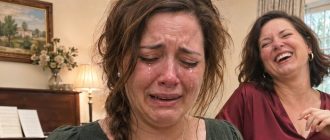
Margaret opened her mouth.
No words came out.
Grandpa reached into his cardigan and removed a worn blue notebook.
“I kept a record.”
He placed it carefully on the table.
“Six years of conversations, with dates and details.”
Margaret stared at the notebook.
“Dad, you don’t understand. I didn’t mean—”
“Please,” Grandpa interrupted softly. “I’ve listened to enough explanations.”
Then he turned toward me.
“Emily, would you please ask Mr. Whitmore to come inside? He’s waiting outside.”
My heart began pounding.
Mr. Whitmore was our family’s attorney.
I walked toward the back door.
A silver Buick was parked beside the machinery shed.
I approached the driver’s window and knocked.
Mr. Whitmore lowered the glass.
“Is he ready?”
I nodded.
“Grandpa says it’s time.”
He picked up his briefcase and followed me into the farmhouse.
The moment Margaret saw him, her expression changed.
Grandpa had clearly been preparing for this conversation long before Christmas.
Mr. Whitmore approached the dining table.
“Merry Christmas, everyone. Walter has asked me to explain several important decisions regarding his estate.”
Grandpa nodded.
“Please continue.”
The attorney opened his briefcase.
“Walter has recently finalized a revised estate plan.”
Margaret leaned forward.
Mr. Whitmore continued.
“The 640-acre farm is now covered by a conservation agreement intended to preserve its agricultural purpose.”
Richard frowned.
“What exactly does that mean?”
“It means the property cannot simply be subdivided and sold for residential development.”
Margaret looked stunned.
“What about the southern section?”
“That land is protected for agricultural use as well,” the attorney confirmed.
Grandpa gave a small smile.
“This farm isn’t a winning lottery ticket, Margaret.”
Mr. Whitmore removed another document.
“Walter has also established a trust to support the continued operation and preservation of the farm.”
He glanced down at the paperwork.
“After Walter’s lifetime, the appointed successor trustees will be Michael Warren and Emily Warren.”
I stared at him.
My name.
Michael’s name.
I turned toward Grandpa.
“You never told me!”
He smiled.
“You never asked what you’d receive when I was gone, Emily. You only asked whether I needed anything while I was here.”
Then he looked at Michael.
“You’ve worked beside me for thirty years. Not once have I heard you calculate what you’ll inherit after my death.”
Michael lowered his eyes.
Grandpa continued.
“I heard what you told the veterinarian. About making sure I’d always have a place on this farm as long as I wanted to work.”
Tears filled Michael’s eyes.
“Dad…”
Grandpa reached across the table and squeezed his hand.
Margaret interrupted.
“And what exactly happens to my side of the family?”
Mr. Whitmore checked the documents.
“Walter has included a cash inheritance of 30,000 dollars for your household.”
Richard stared in disbelief.
“Thirty thousand dollars? From property worth several million?”
Grandpa met his eyes.
“This is a working farm, Richard. I didn’t spend my life building it so somebody could sell it the moment I’m buried.”
Margaret looked devastated.
But Grandpa wasn’t finished.
He opened the blue notebook.
“There are a few other things I want everyone to hear.”
Nobody moved.
He turned to a page with a folded corner.
“Sophie. July 2023.”
My cousin slowly raised her head.
Grandpa explained that he’d heard her talking about her anxiety, her artwork, and her dream of attending art school.
Sophie began to cry.
“You actually heard all that?”
“Every word, sweetheart.”
He smiled warmly.
“Your grandmother saw your drawings, too. She believed you had a wonderful talent.”
Then he announced that he’d established an educational fund specifically for Sophie’s art studies.
Her parents would have no authority over the money.
Sophie covered her mouth with both hands.
“Grandpa…”
He smiled.
“Go out into the world and create something beautiful.”
Then he turned another page.
“Diane. Thanksgiving 2023. You told Rose that marrying into our family was one of the greatest blessings of your life.”
Diane pressed a hand against her chest.
Grandpa continued.
“Emily. Christmas 2022. You promised your grandmother that you’d never leave us alone when we needed help.”
I’d almost forgotten saying those words.
Grandpa’s eyes glistened.
Then he reached the final pages.
The handwriting was different.
I recognized the familiar rounded letters immediately.
Grandma’s handwriting.
“Rose left me something to read when the family gathered for Christmas,” Grandpa explained.
The room became completely quiet.
He adjusted his glasses.
Then began reading.
“Margaret, my beautiful firstborn daughter.”
Margaret looked up.
Grandma’s letter described the little girl who used to ride beside Grandpa on his tractor.
The girl who proudly announced at church that she intended to become a farmer just like her father.
Grandma wondered when the land had stopped feeling like home to her daughter.
When had the farm become something she wanted to sell rather than a place filled with childhood memories?
Then came the words that changed the entire atmosphere.
“Margaret, I know you’ve said things that have hurt your father. But I still remember the little girl who adored him.”
Grandpa paused.
His voice trembled.
Then he continued.
“When I’m gone, your father will be lonely. He won’t admit it, but he’ll need the people he loves around him.”
Margaret began crying.
Grandpa read the final lines.
“Please visit because you want to spend time with your father, not because you expect to receive something from him. Talk with him, Margaret. Don’t talk about him as though he’s already gone.”
He closed the notebook.
“Forever your loving mother, Rose.”
Margaret buried her face in her hands.
For several minutes, nobody said anything.
Eventually, she looked toward Grandpa.
“Dad, I’m so sorry.”
He studied her carefully.
“What are you sorry for?”
She struggled to steady her voice.
“For treating you like you weren’t sitting there. For discussing your property behind your back. For the terrible thing I said after Mom died.”
Her voice broke.
“For forgetting that you were still my father.”
Grandpa nodded slowly.
“That was the part that hurt, Margaret.”
He looked around the table.
“Even before I got my hearing aids, I could see when people stopped treating me like I mattered.”
Brandon rose from his chair and approached him.
“I’m sorry too, Grandpa.”
Grandpa acknowledged him with a nod.
Then he surprised everyone again.
He knew Brandon had accumulated substantial student debt.
Instead of simply handing him money, Grandpa offered him a paid position during the spring planting season.
“You come here, do the work, and earn a proper wage,” he explained. “Michael could use another pair of hands.”
Brandon looked astonished.
“You’d still let me work here after what I said?”
Grandpa smiled.
“I think you need the chance to feel proud of something you’ve accomplished yourself.”
Later that evening, after the guests had gone home, I found Grandpa sitting on the back porch.
He had wrapped himself in one of Grandma’s old quilts.
I brought him a cup of hot coffee.
“Are you feeling okay?”
He gazed across the snow-covered fields.
“I’m tired, Emily.”
“Of what?”
“Keeping up the act.”
I sat beside him.
“Why did you let it continue for so many years?”
He considered the question.
“At first, I wanted to know who would still care about me when they believed I couldn’t do anything useful for them.”
He looked toward the farmhouse.
“People were happy to have me around when I could fix their tractors, lend them money, and make difficult decisions.”
He paused.
“But when they thought I was nothing more than an old man who couldn’t hear, I discovered who was still willing to sit beside me.”
I swallowed.
“And who was?”
He smiled.
“Michael. Diane. Sophie. You.”
His expression softened.
“And Rose. Always Rose.”
I asked whether he believed Margaret would change.
“I hope she will.”
He glanced at the notebook resting on his lap.
“Your grandmother once told me that I should be careful what I went looking for, because I might actually find it.”
He gave a quiet chuckle.
“I was looking for love, Emily.”
“And did you find it?”
He turned toward me.
“More than I expected.”
The following spring, Brandon arrived at the farm on the first morning of March.
It was five o’clock.
He wore spotless work boots and a jacket that looked as though it had just come out of the store.
Michael wasn’t convinced he’d last.
But Brandon returned the next morning.
And the morning after that.
During his first week, he made mistake after mistake.
He struggled to operate machinery.
He got stuck in a muddy field.
He needed constant guidance.
But he kept showing up.
By April, his boots were permanently stained with mud, and his hands had become rough from physical labor.
He learned to handle equipment properly.
He helped prepare the fields for planting.
Every afternoon, he sat down to eat lunch with Grandpa.
Sometimes their conversations lasted for hours.
When planting season ended, Grandpa paid Brandon 26,000 dollars for the work he’d completed.
Brandon used the money to reduce his student loans.
Then he asked whether he could return for the harvest.
Grandpa happily agreed.
Meanwhile, Sophie began preparing to attend art school.
Grandpa and I accompanied her when she moved into her dormitory.
Before we left, she handed him a drawing.
It showed our family’s dining table surrounded by twenty-two chairs.
At the head sat an elderly man wearing a brown cardigan.
He was looking up.
Listening.
Grandpa studied the drawing for a long time.
Then he pulled Sophie into a hug.
For several months after Christmas, Margaret stayed away from the farm.
She sent Grandpa a birthday card.
Later, she called briefly to ask about the weather.
Gradually, those short conversations became longer.
Then, in October, she arrived at the farmhouse.
Alone.
Richard hadn’t come with her.
I was in the living room when she knocked.
“Hello, Dad,” she said nervously.
“Hello, Margaret.”
“Would it be all right if I came in?”
Grandpa stepped aside.
They sat together at the kitchen table.
He poured two cups of coffee.
For a while, neither knew what to say.
Then Margaret mentioned Grandma’s letter.
“I’ve read it over and over.”
Grandpa waited.
“I’d completely forgotten how much I loved riding on that old tractor with you.”
“You used to tell everyone you were going to run a farm one day,” he reminded her.
Margaret smiled through her tears.
“I remember.”
Then she confessed something she’d never told him before.
When she left for college, she’d become embarrassed by her rural upbringing.
Many of her classmates came from wealthy families.
Some made jokes about people who lived and worked on farms.
So Margaret stopped talking about where she’d grown up.
Later, she married Richard.
He measured success through expensive possessions, social standing, and money.
Over time, she began adopting the same values.
“Somewhere along the way,” she whispered, “I forgot this place was home.”
Grandpa looked at her.
“And what do you want now?”
She wiped her eyes.
“I want my dad back.”
For several moments, they sat in silence.
Then Grandpa stood.
“Come here, sweetheart.”
Margaret rose.
He wrapped his arms around her.
I quietly stepped outside.
Some conversations are meant to happen without an audience.
The following Christmas, twenty-four relatives gathered at the farmhouse.
Brandon brought his girlfriend.
Sophie returned from art school carrying a portfolio full of new drawings.
Michael carved the ham.
Diane baked Grandma’s favorite dinner rolls.
Even Richard attended, although he spoke much less than he had in previous years.
Grandpa sat at the head of the table in his familiar brown cardigan.
He no longer pretended he couldn’t hear.
When somebody asked him a question, he answered normally.
When someone told a joke, he laughed.
When Sophie showed him her newest artwork, he asked about her ideas and techniques.
And for the first time in years, everyone made an effort to speak directly to him.
Halfway through dinner, Margaret stood.
She gently tapped her glass.
“Could I have everyone’s attention for a moment?”
The conversations stopped.
Margaret turned toward Grandpa.
“Dad, I love you.”
She took a breath.
“Not your property. Not your money. Not what I might inherit someday. I love you.”
Tears filled Grandpa’s eyes.
Margaret raised her glass.
“To Dad.”
Everyone joined her.
“To Walter!”
Grandpa lifted his own glass.
Then he whispered, “To Rose.”
We repeated Grandma’s name.
For one beautiful moment, it felt as though she were sitting at the table with us again.
After dinner, Grandpa asked me to join him in the living room.
He took the blue notebook from his cardigan.
The cover had become worn, and nearly every page was covered in writing.
He opened it to the final page.
There was one empty line left.
He handed me a pen.
“Write today’s date, Emily.”
I did.
“Now write this.”
I looked up at him.
Grandpa smiled.
“Christmas. Everyone spoke with kindness. Nobody said anything they wouldn’t have wanted me to hear.”
I carefully wrote down his words.
He closed the notebook and placed it in my hands.
“It’s yours now.”
I looked at him in surprise.
“Don’t you need it anymore, Grandpa?”
He shook his head.
“No.”
“Why?”
He reached behind his ear and gently touched his hearing aid.
“For six years, I listened because I wanted to find out who truly cared about me.”
He glanced toward the dining room.
Margaret was helping Diane clear the dishes.
Brandon was showing Michael photographs of the fields they’d worked together.
Sophie was drawing the Christmas tree.
Everyone was laughing and talking.
And nobody was behaving as though Grandpa were invisible.
He turned back toward me.
“I don’t need to keep a record anymore, Emily.”
Then he smiled.
“From now on, I just want to enjoy the sound of the people I love.”
That was when I finally understood what his blue notebook had really represented.
It wasn’t a list of people who deserved a share of his fortune.
It wasn’t simply a record of unkind words.
It was a reminder of who had continued treating him like a human being when they believed he had nothing left to offer.
The farmland might remain in our family for generations.
The inheritance might transform someone’s financial circumstances.
But the most precious thing Grandpa gave us was something money could never purchase.
He taught us that people don’t stop needing love, dignity, and respect simply because they grow old.
And that we should never wait until someone is gone to realize how desperately they wanted us to listen.