My name is Margaret, and I’m 73 years old.
Eighteen years ago, I boarded a flight carrying more grief than I thought a person could survive.
I was flying home to bury my daughter and my grandson after a terrible car accident had taken both of them from me within seconds. By the time I got on that plane, I felt numb. Empty. Like the world had already ended and everyone else somehow kept moving.
I barely noticed the noise coming from several rows ahead at first.
But eventually the crying became impossible to ignore.
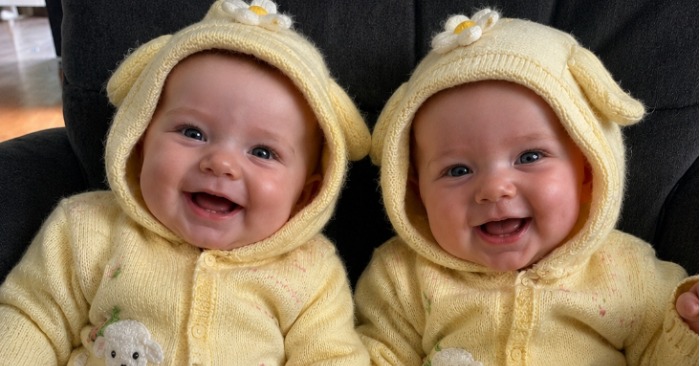
Two babies — a little boy and girl, probably around six months old — sat alone in their seats screaming so hard their tiny faces had turned bright red.
No parent sat beside them.
No one comforted them.
And what upset me most wasn’t the crying.
It was the people around them.
A man walking past muttered, “Why would somebody bring babies on a flight if they can’t control them?”
A woman in expensive jewelry rolled her eyes dramatically every time one of them whimpered.
Another passenger snapped, “Can someone PLEASE shut them up?”
I remember gripping my armrest so tightly my fingers hurt.
The flight attendants looked overwhelmed. Every time they tried approaching the twins, the babies only cried harder, shrinking back in fear.
The young woman seated next to me finally leaned closer and whispered softly, “Somebody has to help those poor babies.”
I looked toward the twins again.
By then they had stopped screaming and started making those exhausted little hiccup cries babies make when they’ve cried too long.
Something inside me cracked.
Before I could overthink it, I stood up and walked toward them.
The moment I picked them up, everything changed.
The little boy pressed himself against my shoulder immediately, trembling like he was terrified someone would let go of him again.
The little girl grabbed onto my sweater with both tiny fists and rested her cheek against my neck.
And just like that, the crying stopped.
The entire cabin fell silent.
I looked around at the passengers and asked, “Are these babies with anyone? Is their mother or father on this flight?”
Nobody answered.
Not one person moved.
The woman beside me watched quietly before saying something I still think about to this day.
“Maybe they were meant to find you.”
I sat back down holding both babies, and for the first time since my daughter died, I didn’t feel completely hollow anymore.
The woman next to me asked where I was traveling from, and somehow I started telling her everything.
About my daughter.
About my grandson.
About the funeral waiting for me when the plane landed.
About how I dreaded walking into my silent house afterward.
She listened carefully the entire time.
Then she asked where I lived.
I told her anyone in town knew the yellow house with the big oak tree in front.
Looking back now, I realize how strange that conversation was.
At the time, I was too broken to notice.
When the flight landed, I carried the twins straight to airport security and explained the situation.
Police got involved.
Then social services.
I spent hours answering questions, giving statements, showing identification, explaining over and over that I had no idea who the babies belonged to.
Airport staff searched everywhere for a parent.
No one came forward.
No frantic mother appeared.
Nobody even asked about them.
Eventually, social services took the twins into temporary custody.
I attended my daughter’s funeral the next morning.
People hugged me.
Prayed over me.
Told me time would heal things.
But all I could think about were those babies.
The little girl’s hand gripping my sweater.
The little boy falling asleep against my chest.
By the end of the funeral, I already knew.
I went directly to social services afterward and told them I wanted to adopt them.
At first they thought grief had clouded my judgment.
I was 55 years old at the time.
Widowed.
Recently traumatized.
The social workers questioned me repeatedly.
“Are you absolutely certain?”
“Yes.”
“Twins are difficult even for younger parents.”
“I know.”
“You’re still mourning.”
“I know that too.”
But nothing they said changed my mind.
Those babies had already become part of my heart.
The process took months.
Background checks.
Home visits.
Financial reviews.
Interviews with neighbors.
But eventually everything was approved.
And three months after that flight, the twins officially became my children.
I named them Ethan and Sophie.
Raising them saved my life.
That’s the simplest truth I know.
When grief made me want to disappear completely, those two babies forced me to keep going.
I packed lunches.
Read bedtime stories.
Sat through school plays and science fairs.
I stayed up through fevers, nightmares, heartbreaks, and college applications.
And somehow, in the middle of raising them, my broken heart slowly healed.
Ethan grew into a thoughtful, protective young man who could never ignore injustice.
Sophie became brilliant, compassionate, and fearless in ways that reminded me painfully of my daughter.
They were my children in every way that mattered.
Then last week, the past came crashing through my front door.
Literally.
Someone knocked sharply one morning while Ethan and Sophie were downstairs making breakfast.
When I opened the door, I found a sharply dressed woman standing there wearing heels far too expensive for my neighborhood.
The perfume surrounding her nearly gave me a headache.
Then she smiled.
And suddenly I recognized her.
My stomach dropped instantly.
“Hello, Margaret,” she said smoothly. “It’s been a long time.”
My mind flew back eighteen years.
The woman sitting beside me on the plane.
The one who encouraged me to comfort the babies.
The one who listened to my grief.
It was her.
“You,” I whispered.
“I was wondering if you’d remember me.”
Before I could answer, she stepped into my house without permission, casually looking around at family photographs lining the walls.
Her eyes lingered on Ethan and Sophie’s graduation portraits.
Then she said the sentence that nearly stopped my heart.
“I’m their biological mother.”
Silence swallowed the room.
Ethan and Sophie had just walked into the hallway behind me, and both froze instantly.
“You abandoned them,” I said quietly.
She crossed her arms.
“I was young. Twenty-three. I had opportunities I wasn’t willing to lose. Twins weren’t part of the plan.”
There wasn’t a trace of shame in her voice.
Only irritation.
Then she added something even worse.
“When I saw you on that flight grieving your family, I figured maybe you needed them as much as they needed someone.”
I stared at her in disbelief.
“You manipulated me.”
“I gave them a better life than I could provide back then.”
Then she pulled a thick envelope from her purse.
“That’s why I’m here.”
Ethan immediately stepped closer to Sophie.
“What do you want?” he asked coldly.
The woman smiled slightly.
“My father died recently.”
No one spoke.
“He left his estate to his grandchildren.”
Sophie’s eyebrows furrowed.
“And?”
“And the inheritance requires one small complication to be handled first.”
She extended the envelope toward them.
“All you have to do is legally acknowledge me as your mother.”
I felt sick.
Sophie’s voice turned icy.
“So you tracked us down because there’s money involved?”
Her expression hardened slightly.
“If you refuse, the estate goes elsewhere. Everyone loses.”
I finally snapped.
“Get out of my house.”
But she ignored me completely.
“You’re adults now,” she told Ethan and Sophie. “Think logically. We’re talking about life-changing money.”
Then she looked directly at me and added cruelly:
“Or you can stay here pretending this old woman rescuing you out of pity somehow makes her your real mother.”
Ethan moved so quickly I barely saw him step forward.
“She raised us,” he said sharply. “You abandoned us.”
“I made a difficult decision.”
“You left babies alone on a plane.”
The room exploded into shouting after that.
Finally, I grabbed my phone and called Caroline.
Caroline had handled the adoption eighteen years earlier.
And unlike me, she never lost her composure.
When she arrived an hour later and read through the documents, her expression became colder with every page.
Finally she looked directly at Alicia.
“This is disgusting.”
Alicia folded her arms.
“My father created the conditions in his will.”
“No,” Caroline replied calmly. “Your father left money to his grandchildren. You’re trying to manipulate access to that inheritance by emotionally blackmailing them.”
Then she turned toward Ethan and Sophie.
“You do not need to sign anything.”
Alicia’s confidence finally cracked.
“What?”
“The estate belongs to them regardless. You have no authority to withhold it.”
Sophie’s face hardened with realization.
“So you never came here because you loved us.”
Alicia said nothing.
Ethan spoke next.
“Margaret is our mother. She’s the person who stayed.”
For the first time since Alicia arrived, she actually looked rattled.
But Caroline wasn’t finished.
“There’s another issue,” she added.
Alicia frowned.
“You abandoned infants without legal surrender procedures. That opens the door to serious legal consequences.”
Alicia laughed nervously.
“You can’t be serious.”
Caroline was completely serious.
Within weeks, lawyers uncovered everything.
Years of unpaid child support.
Documentation of abandonment.
Emotional damages.
Court records.
And in the end, the judge sided completely with Ethan and Sophie.
Not only did they receive their grandfather’s inheritance in full, but Alicia was ordered to pay substantial financial compensation for abandoning them.
When the ruling was read, Alicia looked stunned.
“You’re making me pay THEM?”
The judge answered coldly:
“You walked away from your responsibilities for eighteen years.”
The story spread online faster than any of us expected.
People flooded Ethan and Sophie with messages about adoption, chosen families, and absent parents trying to reconnect only when money appeared.
But my favorite moment happened quietly.
A few nights ago, we sat together on the porch watching the sunset.
Sophie leaned her head against my shoulder.
Ethan sat on the steps below us.
After a long silence, Sophie asked softly, “Do you think she regrets leaving us?”
I thought carefully before answering.
“I think she regrets losing access to the money. And honestly, that tells you everything.”
Ethan nodded slowly.
“You know what’s strange? I don’t even hate her anymore. She feels like a stranger.”
Because that’s exactly what she was.
A stranger connected by blood.
Nothing more.
Then Sophie squeezed my hand gently.
“Thank you for choosing us.”
My throat tightened immediately.
“You two saved me too,” I whispered.
And that’s the truth.
People say I rescued those babies eighteen years ago.
But the reality is… they rescued me first.
Blood alone does not create a family.
Love does.
Showing up does.
Staying does.
Alicia may have given birth to Ethan and Sophie.
But I earned the right to be called their mother.