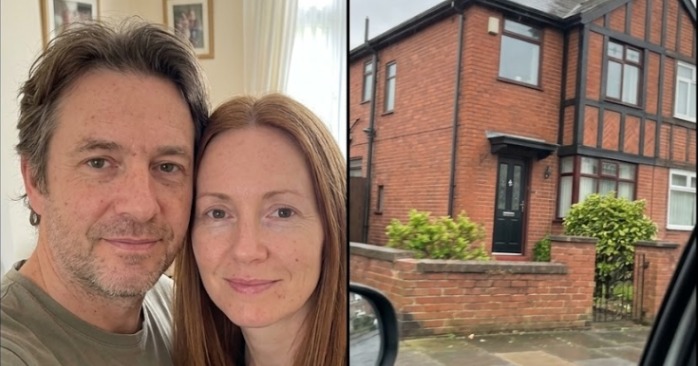
At 55, I thought my life was finally stable—predictable in the quiet, comforting way you assume comes after decades of marriage, work, and survival.
My name is Madison.
I had already done what I believed were the hardest chapters: raising children, building a career, losing loved ones, and learning how to keep going anyway. I told myself the rest would be simple.
Nothing dramatic left to uncover. Nothing left to shake the ground.
Then I lost my job.
They called it restructuring. I called it a slow erasure—twenty years reduced to a handshake, a severance letter, and a polite smile from someone who barely knew my name.
Richard, my husband of 28 years, told me to see it as rest.
“Maybe you’ve earned a pause,” he said.
But rest didn’t come. What came instead was stillness that felt unfamiliar, like I had been removed from my own life and left without instructions.
So I did what I always do when I feel unsteady—I cleaned.
Closets. Drawers. Rooms we hadn’t touched in years.
That’s how I ended up in the attic.
It was supposed to be nothing. Old boxes, forgotten decorations, the usual clutter of a long marriage. I told myself I was just passing time.
Until I found a sealed box tucked behind insulation.
It wasn’t like the others. It felt intentional—hidden rather than stored.
Inside was a folder with my husband’s name printed neatly across the top.
And an address I had never seen before.
I opened it.
Property records. Deeds. Mortgages.
A second house.
Purchased years after we were married.
My chest tightened as I read the dates again and again, hoping I had misunderstood something simple.
We had always been “we.” One home. One life. One shared history.
So what was this?
I called him immediately. No answer. Again. Nothing.
That was the moment something in me shifted—from confusion to certainty that I couldn’t ignore anymore.
I drove.
The address led me across town to a quiet street I never had reason to visit. The house wasn’t large or extravagant. It was too ordinary for how wrong it felt.
Porch light on. Flowers in a pot. A place that looked lived in.
I sat in my car longer than I care to admit.
Then I went to the door.
It opened almost immediately.
The woman who stood there looked like she had been expecting me.
Not surprised. Not startled.
Prepared.
“Are you here about Richard?” she asked calmly.
My mouth went dry. “Yes. I’m Madison. His wife.”
She stepped aside without another word.
Inside, everything felt too controlled—too arranged, too intentional.
“I don’t understand what this is,” I said, voice shaking more than I wanted it to. “I’ve been married to him for nearly three decades. I just lost my job, and now I find this… hidden property. I feel like I’m losing my mind.”
She watched me carefully, then finally spoke.
“My name is Elaine,” she said. “I’m his mother.”
The words didn’t land immediately. They hovered somewhere between impossible and devastating.
My mother-in-law.
The one Richard told me preferred isolation. The one I was never invited to see.
Elaine let out a small, tired breath. “That part is true. I do like my space. But I’m also… here because he pays me to be.”
My confusion deepened. “Pays you?”
She nodded slowly. “He told me to tell anyone who came here that this was a surprise home for your future. For retirement.”
My skin went cold.
“He said if you ever found this place, I was to convince you it was meant for both of you,” she added.
Then she opened a drawer and handed me another folder.
“Before you decide what you believe, read this.”
I did.
And everything I thought I understood about my life began to fracture.
Pages of notes. Observations. Dated entries describing me—my moods, my habits, my forgetfulness, my appointments, even private comments I barely remembered saying.
Not love.
Not concern.
Documentation.
Clinical, structured, deliberate.
My breath turned shallow as I turned page after page.
“March 12: withdrawn behavior noted. Possible depressive episode.”
“July 8: missed appointment. Cognitive lapse suspected.”
I looked up at her. “What is this supposed to be?”
Her expression tightened. “There’s more.”
A trust document.
Control structures. Legal language. Conditions.
If I were ever declared “unfit,” decisions about my life, finances, even autonomy could be redirected.
My hands went numb around the papers.
“This isn’t care,” I whispered. “This is… preparation.”
Elaine didn’t argue.
She just said, “He made me believe you were unstable.”
The room tilted slightly as I tried to hold onto logic.
“And you believed him?”
“At first,” she admitted. “Until I met you.”
Silence stretched between us.
Then it clicked into place with sickening clarity.
This wasn’t a secret life.
It was a plan.
A contingency.
Something designed around the idea that I might one day need to be managed.
I asked her not to tell him I knew.
Not yet.
She agreed—carefully, conditionally.
And I left.
That night, I didn’t confront him.
Something inside me had already shifted.
Instead, I began to watch.
To document.
To quietly gather my own version of reality.
Every smile I forced at dinner. Every question he asked that felt slightly too precise. Every moment I realized I was being studied as much as I was being spoken to.
One evening, I tested him.
“Do you ever think about how easily things change?” I asked casually.
He studied me for a second too long. “Why would you ask that?”
“No reason,” I said lightly.
But I had already decided something else.
I was done being observed.
I was going to start seeing clearly too.
I met a lawyer quietly. A therapist under a separate account. I kept records. I prepared.
And then I waited for the moment he would slip.
It came during a calm evening conversation when I finally said, “I found something in the attic.”
He didn’t deny it.
He only said, “I was hoping you wouldn’t.”
That was all I needed.
From there, it stopped being confusion and became clarity.
I slid my own folder across the table.
His face changed as he read.
Because now he understood.
I wasn’t unprepared.
“You have two options,” I told him quietly. “We end this cleanly, or I expose everything.”
He tried to speak. Tried to justify.
But I had already stopped listening.
In the end, he chose silence.
So did I.
The papers were signed. The structure dissolved. The second house disappeared from our shared story as quickly as it had appeared.
Months later, I sat across from him one last time.
He looked smaller somehow. Not physically—just stripped of certainty.
“You outplayed me,” he said bitterly.
I shook my head.
“No,” I replied. “I just stopped trusting you.”
And when I left that office, I didn’t feel victorious.
I felt something simpler.
Like I had finally stepped out of a life someone else had been quietly designing for me—and taken the first real breath that belonged only to me.