
Donatella Versace made a powerful and deeply personal statement on the streets of Rome, choosing fashion as her language of remembrance. The designer stepped out in a striking bright red suit — a clear and deliberate reference to the legendary “Valentino red” forever associated with Valentino Garavani.
The look was impossible to miss. Saturated red from head to toe, paired with towering platform heels in the same shade and oversized black sunglasses, the outfit felt both bold and restrained. It wasn’t theatrical. It was intentional. Every detail worked together in quiet precision, creating a visual tribute that spoke without explanation.
Walking beside her was Pierpaolo Piccioli, the former creative director of Valentino. Dressed simply in black with sneakers, he provided a stark contrast that only amplified the intensity of Donatella’s red. Together, they became a moving symbol of respect, continuity, and shared history.
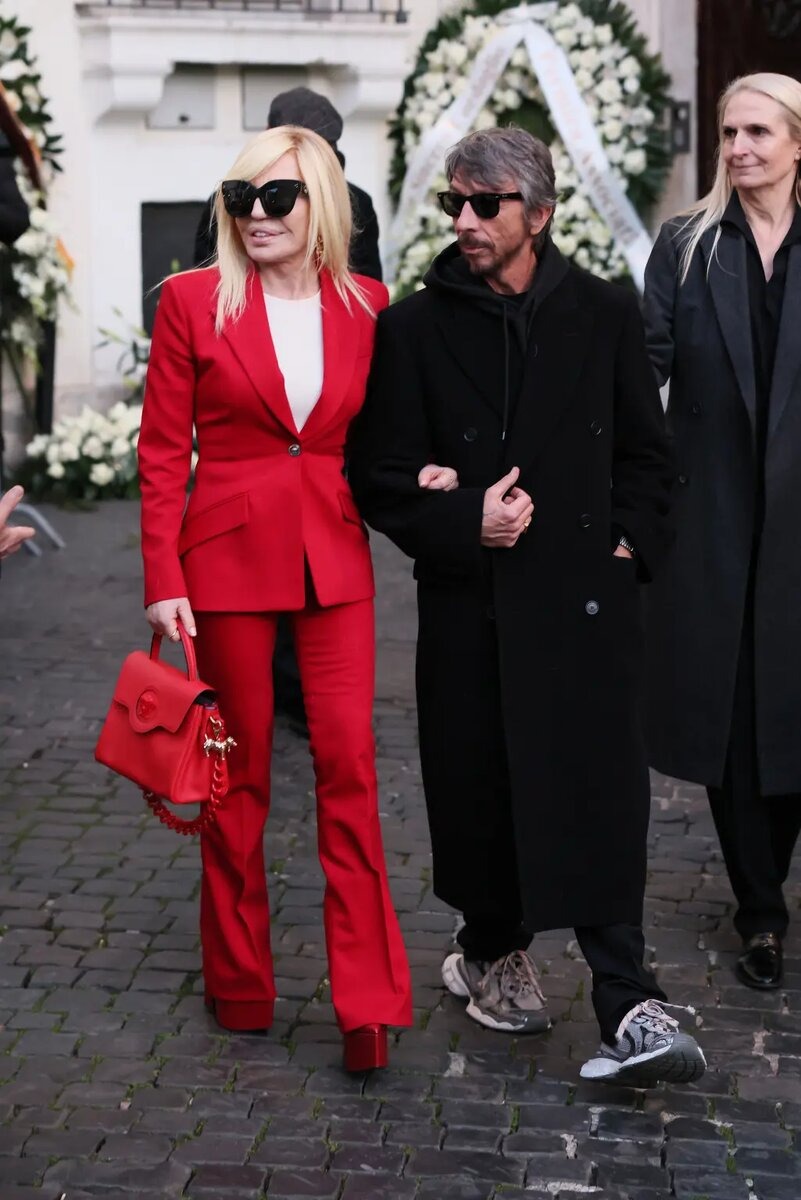
The color itself carries decades of meaning. “Valentino red” was officially recognized by Pantone and dates back to Garavani’s debut in 1959, when he first presented a dress in a vivid poppy shade. That moment marked the beginning of a color that would define an entire fashion legacy.
According to fashion lore, Valentino’s obsession with the hue began much earlier, inspired by the dramatic costumes of Georges Bizet’s opera Carmen, which he encountered in his youth. Over time, the color evolved from inspiration into identity, becoming inseparable from his name and his brand.
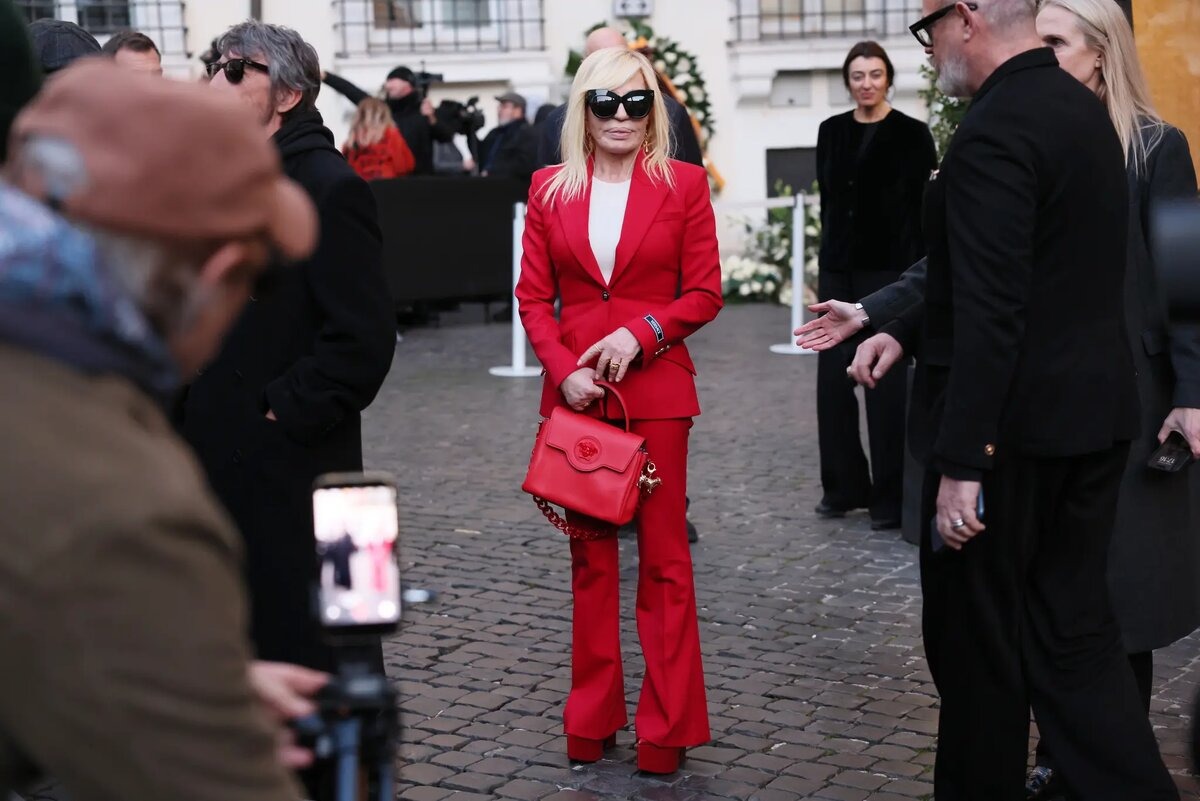
Valentino Garavani passed away at the age of 93. At present, his body lies in repose, with funeral services scheduled for the following day. News of his death triggered an outpouring of tributes from designers, artists, and public figures around the world, all acknowledging the scale of his influence.

Donatella herself shared a heartfelt message, writing that the world had lost a true maestro whose art would live on forever. She подчеркнула that he would never be forgotten, allowing emotion to replace any need for elaboration.
Her appearance in Rome went beyond a fashion moment. It was grief expressed through color, memory translated into silhouette, and respect rendered visible. In that red, fashion became emotion — and Valentino’s legacy burned as brightly as ever.